
Anchoring Script in Hindi and English
Full Programme
Anchoring script in Hindi and English: welcome speech, item introductions, chief guest felicitation and vote of thanks, written line by line with blanks to fill.

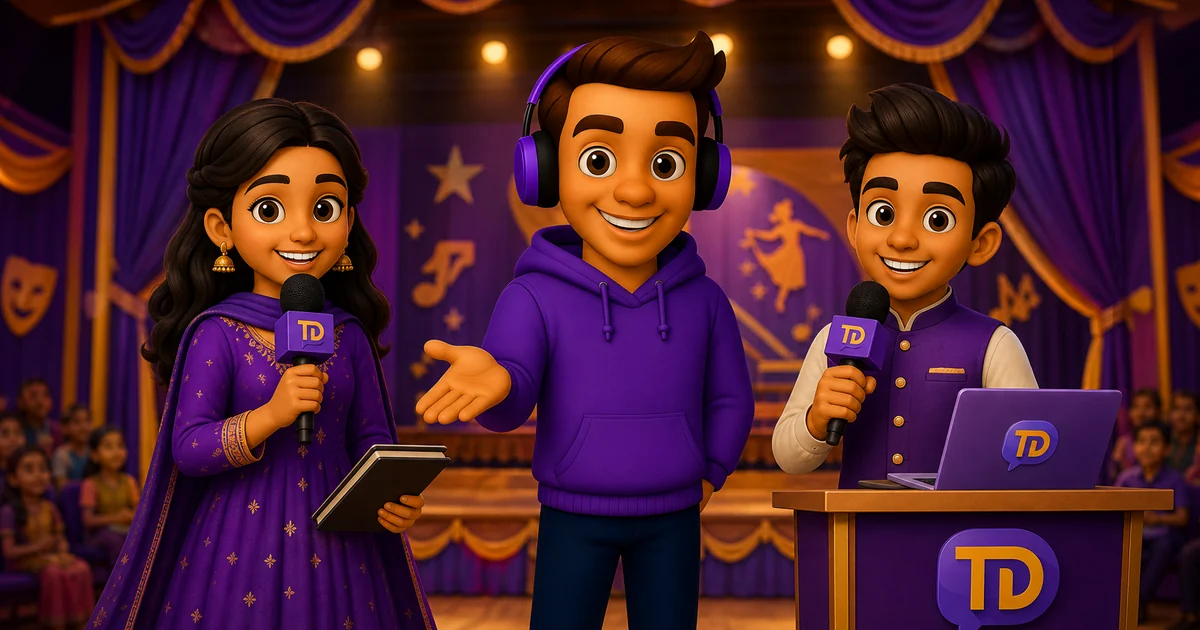
Anchoring Script in Hindi and English, Line by Line
Hosting in Hindi is not the English script translated. The English one is built on short declarative sentences; Hindi carries the same job on a longer, more formal register, and a word-for-word conversion produces something that sounds like a notice being read out rather than a person speaking.
So the script below is written in Hindi first, with the English beside it. You can host entirely in Hindi, entirely in English, or alternate — which is what most bilingual programmes actually need, and why every line is given twice.
Everything is here in running order: the opening, the welcome, the lamp lighting, the chief guest, the item introductions, the prize distribution, the vote of thanks and the close. Fill the blanks with real names and it is ready to read.
Key Takeaways
- Every line appears in both languages, so a bilingual programme needs no second preparation.
- The Hindi is written to be spoken, not translated — the register is formal but the sentences stay short enough to say in one breath.
- Blanks are marked
\_\_\_\_\_\_\_\_\_\_. The only parts that belong to you are the names, the class numbers and the item titles. - There are eight rotating item introductions, so you are not saying the same sentence before every performance.
- The delay lines near the end are the ones you will actually need, because something always runs late.
What Is the Full Running Order?
Take this as a template and check it against your school's programme sheet, which is the authority on the day.
| # | Segment | Anchor | Roughly |
|---|---|---|---|
| 1 | आगमन एवं स्वागत — arrival and settling | Anchor 1 | 2 min |
| 2 | सरस्वती वंदना — invocation | — | 4 min |
| 3 | दीप प्रज्ज्वलन — lamp lighting | Anchor 2 | 3 min |
| 4 | स्वागत भाषण — welcome speech | Anchor 1 | 3 min |
| 5 | मुख्य अतिथि परिचय — chief guest introduction | Anchor 2 | 3 min |
| 6 | सांस्कृतिक कार्यक्रम — cultural items | Both, alternating | 40–60 min |
| 7 | मुख्य अतिथि उद्बोधन — chief guest address | Anchor 1 | 10 min |
| 8 | पुरस्कार वितरण — prize distribution | Anchor 2 | 15 min |
| 9 | धन्यवाद ज्ञापन — vote of thanks | Anchor 1 | 3 min |
| 10 | राष्ट्रगान एवं समापन — anthem and close | Anchor 2 | 2 min |
The Opening and Welcome
| हिंदी | English |
|---|---|
| आदरणीय मुख्य अतिथि महोदय, सम्मानीय प्रधानाचार्य जी, आदरणीय शिक्षकगण, अभिभावकगण और मेरे प्यारे साथियों — आप सभी को मेरा नमस्कार। | Respected chief guest, honourable Principal, esteemed teachers, parents, and my dear friends — my greetings to all of you. |
| मैं __________ और मेरे साथ हैं __________। आज के इस कार्यक्रम में हम आप सभी का हार्दिक स्वागत करते हैं। | I am __________ and with me is __________. We warmly welcome all of you to today's programme. |
| किसी भी शुभ कार्य का आरंभ माँ सरस्वती की वंदना से किया जाता है। मैं __________ की कक्षा ____ की छात्राओं से निवेदन करती हूँ कि वे मंच पर आएँ। | Every auspicious occasion begins with an invocation to Goddess Saraswati. I request the students of Class ____ to come to the stage. |
| अब मैं आमंत्रित करता हूँ हमारे मुख्य अतिथि __________ जी एवं प्रधानाचार्य जी को, दीप प्रज्ज्वलन हेतु। | I now invite our chief guest __________ and our Principal to light the ceremonial lamp. |
| दीप का प्रकाश अंधकार को दूर करता है। यही हमारी शिक्षा भी करती है। | The light of the lamp removes darkness. That is what our education does as well. |
स्वागत भाषण — the welcome speech, about 150 words:
आदरणीय मुख्य अतिथि महोदय, प्रधानाचार्य जी, शिक्षकगण, अभिभावकगण और मेरे साथियों — सभी को नमस्कार।
आज __________ विद्यालय के लिए एक विशेष दिन है। हम यहाँ __________ के अवसर पर एकत्रित हुए हैं।
सबसे पहले मैं हमारे मुख्य अतिथि __________ जी का हृदय से स्वागत करता हूँ। आपने अपने व्यस्त समय में से हमारे लिए समय निकाला, इसके लिए हम आभारी हैं।
मैं उन सभी अभिभावकों का भी स्वागत करता हूँ जो आज यहाँ उपस्थित हैं। आपका यहाँ होना हमारे विद्यार्थियों के लिए सबसे बड़ा प्रोत्साहन है।
और अपने शिक्षकों का — जिनकी मेहनत आज मंच पर दिखाई देगी, पर जो महीनों तक कक्षा में चुपचाप होती रही।
आइए, कार्यक्रम आरंभ करते हैं। धन्यवाद।
In English, the same speech:
Respected chief guest, Principal, teachers, parents and my friends — greetings to all.
Today is a special day for __________ School. We have gathered here on the occasion of __________.
First, I extend a heartfelt welcome to our chief guest, __________. You have taken time out of a busy schedule for us, and we are grateful.
I also welcome every parent present today. Your being here is the greatest encouragement our students have.
And our teachers — whose work will be visible on this stage tonight, but which went on quietly in the classroom for months.
Let us begin. Thank you.
Read this speech aloud before you go on stage
Reading a speech silently is not rehearsing it. Read it aloud in TalkDrill and get scored on pace, pauses and pronunciation — so you know which words you stumble on while there is still time to fix them. Free — after signup.
How Do I Introduce the Chief Guest in Hindi?
Name, position, two things they have done, then the welcome. In that order, and nothing more — an introduction that runs long makes the guest wait standing.
| हिंदी | English |
|---|---|
| आज हमारे बीच उपस्थित हैं __________ जी, जो __________ के पद पर कार्यरत हैं। | Present with us today is __________, who serves as __________. |
| उन्होंने __________ क्षेत्र में ____ वर्षों तक कार्य किया है, और __________ के लिए जाने जाते हैं। | They have worked in the field of __________ for ____ years, and are known for __________. |
| उनकी उपस्थिति हमारे लिए गर्व और प्रेरणा का विषय है। | Their presence here is a matter of pride and inspiration for us. |
| मैं प्रधानाचार्य जी से निवेदन करता हूँ कि वे पुष्पगुच्छ देकर उनका स्वागत करें। | I request our Principal to welcome them with a bouquet. |
Say the guest's name out loud five times before the programme. It is the one word in the whole script you cannot afford to stumble on, and it is usually the least familiar. If a name or a title is genuinely hard, our guide to how to introduce a chief guest has the English version of this same formula.
Eight Ways to Introduce the Next Item
Rotating these is the difference between a host and someone reading a list. Use each once.
| हिंदी | English |
|---|---|
| अब प्रस्तुत है कक्षा ____ के विद्यार्थियों द्वारा एक मनमोहक __________। | Presenting now a captivating __________ by the students of Class ____. |
| संगीत वह भाषा है जिसे समझने के लिए शब्दों की आवश्यकता नहीं। प्रस्तुत है __________। | Music is a language that needs no words to be understood. Presenting __________. |
| अगली प्रस्तुति के लिए इन्होंने कई सप्ताह अभ्यास किया है। स्वागत कीजिए कक्षा ____ का। | The next performers have rehearsed for several weeks. Please welcome Class ____. |
| तालियों की गड़गड़ाहट के साथ स्वागत कीजिए __________ का। | With a big round of applause, please welcome __________. |
| नृत्य केवल शरीर की गति नहीं, भावों की अभिव्यक्ति है। प्रस्तुत है __________। | Dance is not movement alone; it is the expression of feeling. Presenting __________. |
| अब बारी है हमारे सबसे छोटे कलाकारों की। मंच पर आमंत्रित है कक्षा ____। | Now it is the turn of our youngest performers. Class ____ is invited to the stage. |
| हमारी संस्कृति की झलक लिए, प्रस्तुत है __________। | Carrying a glimpse of our culture, here is __________. |
| अगली प्रस्तुति आपको __________ की याद दिला देगी। स्वागत कीजिए। | The next performance will remind you of __________. Please welcome them. |
After an item, say one specific thing about what just happened before you move on. "बहुत सुंदर प्रस्तुति" said eight times is filler. "कक्षा तीन के इन बच्चों ने बिना एक बार रुके पूरा नृत्य किया" is not.
Prize Distribution
| हिंदी | English |
|---|---|
| अब हम कार्यक्रम के उस भाग में आते हैं जिसका सबको इंतज़ार रहता है — पुरस्कार वितरण। | We now come to the part of the programme everyone waits for — the prize distribution. |
| मैं मुख्य अतिथि महोदय से निवेदन करता हूँ कि वे पुरस्कार वितरित करने हेतु मंच पर पधारें। | I request our chief guest to come to the stage to present the prizes. |
| __________ प्रतियोगिता में तृतीय स्थान — __________, कक्षा ____। | Third place in the __________ competition — __________, Class ____. |
| द्वितीय स्थान — __________, कक्षा ____। | Second place — __________, Class ____. |
| और प्रथम स्थान — __________, कक्षा ____। | And first place — __________, Class ____. |
| सभी विजेताओं को हार्दिक बधाई। और उन सभी को भी, जिन्होंने भाग लिया। | Congratulations to all the winners. And to everyone who took part. |
Read the winners' names slowly. This is the one moment in the programme where a mispronounced name is remembered afterwards.
धन्यवाद ज्ञापन — The Vote of Thanks
About 140 words. Thank in descending order of distance from the school: guest, management, parents, teachers, students, staff.
आदरणीय मुख्य अतिथि महोदय, प्रधानाचार्य जी, शिक्षकगण, अभिभावकगण और मेरे साथियों।
अब मुझे धन्यवाद ज्ञापन का सौभाग्य प्राप्त हुआ है।
सर्वप्रथम धन्यवाद हमारे मुख्य अतिथि __________ जी को, जिन्होंने अपना बहुमूल्य समय हमें दिया और अपने शब्दों से हमें प्रेरित किया।
धन्यवाद हमारे प्रधानाचार्य जी और प्रबंधन को, जिनके सहयोग के बिना यह आयोजन संभव नहीं था।
धन्यवाद सभी अभिभावकों को, जो आज यहाँ उपस्थित रहे।
धन्यवाद हमारे शिक्षकों को — मंच के पीछे की सारी मेहनत आपकी है।
धन्यवाद उन सभी विद्यार्थियों को जिन्होंने प्रस्तुति दी, और उन कर्मचारियों को जिन्होंने यह मंच तैयार किया।
और धन्यवाद आप सभी को, जो अंत तक हमारे साथ बने रहे। अब मैं आप सभी से राष्ट्रगान हेतु खड़े होने का निवेदन करता हूँ।
The English version of this speech, with more variations, is in our vote of thanks speech guide.
What Do I Say When Something Runs Late?
Something always does. Six lines that hold the room without announcing that there is a problem.
| हिंदी | English |
|---|---|
| अगली प्रस्तुति की तैयारी हो रही है। तब तक एक छोटी-सी बात। | The next item is getting ready. Until then, a small thought. |
| इस बीच मैं आपको बताना चाहूँगा कि इस कार्यक्रम की तैयारी ____ सप्ताह से चल रही थी। | Meanwhile, let me tell you that this programme has been in preparation for ____ weeks. |
| क्या हम एक बार फिर पिछली प्रस्तुति के लिए तालियाँ बजा सकते हैं? | Could we have one more round of applause for the previous performance? |
| मंच तैयार होने में कुछ क्षण लगेंगे। कृपया अपने स्थान पर बने रहें। | The stage will take a few moments. Please remain in your seats. |
| इस अवसर पर मैं उन सभी का धन्यवाद करना चाहूँगा जो पर्दे के पीछे काम कर रहे हैं। | On this occasion, I would like to thank everyone working behind the curtain. |
| और अब, प्रतीक्षा समाप्त। प्रस्तुत है __________। | And now, the wait is over. Presenting __________. |
Never say "तकनीकी समस्या है" into a live microphone. It turns a ten-second pause into a problem the whole hall is now watching.
Closing the Programme
| हिंदी | English |
|---|---|
| कार्यक्रम अपने समापन की ओर है। मैं सभी से निवेदन करता हूँ कि राष्ट्रगान हेतु सावधान की मुद्रा में खड़े हो जाएँ। | The programme now draws to a close. I request everyone to stand at attention for the national anthem. |
| राष्ट्रगान के पश्चात कृपया अपने स्थान पर ही रहें, जब तक हमारे अतिथि प्रस्थान न कर लें। | After the anthem, please remain in your places until our guests have left. |
| आज की संध्या आपके नाम रही। आप सभी का हार्दिक धन्यवाद, और शुभ रात्रि। | This evening belonged to all of you. Our sincere thanks, and good night. |
The anthem is fifty-two seconds and the timing is fixed. Do not speak over the opening bar, and do not start it until the hall is actually still.
Delivery Notes
Hindi carries better slightly slower than English. The vowels are longer and the compound words are heavier, so a Hindi line read at English pace turns into mush over a loudspeaker. Take it about ten per cent slower than feels natural.
Decide your register before you start and hold it. आप throughout, never mixing in तुम. Formal Hindi is the safe choice on a school stage, and switching mid-programme is what sounds like nervousness.
Hold the mic below your chin, about a fist away, and keep it there when you turn your head. Anchors lose half their volume by turning to look at the stage while the mic stays pointed at where they used to be facing.
The two anchors should agree on handovers by name. "अब मैं आमंत्रित करती हूँ अपने सहयोगी __________ को" is a clean pass. Two people starting at once is the most common stumble in a two-anchor script, and naming the other person prevents it.
Practise the four hardest words, not the whole script. Usually: the guest's name, प्रज्ज्वलन (pra-jjwa-lan), ज्ञापन (gyaa-pan), and whichever item title is in Sanskrit. You can paste the English lines into Read Aloud practice (free with a TalkDrill account) and rehearse them aloud, with every word scored.
हिंदी में और सामग्री
- आज का सुविचार, अर्थ सहित — चालीस सुविचार विषय के अनुसार, कबीर और रहीम के दोहे अर्थ के साथ, और तीस सेकंड की पूरी स्क्रिप्ट।
- प्रार्थना, अर्थ और उच्चारण सहित — संस्कृत श्लोक पंक्ति-दर-पंक्ति अर्थ के साथ, तथा ग़ैर-धार्मिक विकल्प।
Common Questions
क्या पूरा कार्यक्रम हिंदी में संचालित किया जा सकता है? हाँ। इस पृष्ठ की हर पंक्ति हिंदी में पूरी है, इसलिए आप अंग्रेज़ी कॉलम को पूरी तरह छोड़ सकते हैं। मिश्रित कार्यक्रम के लिए एक साफ़ नियम यह है: औपचारिक भाग हिंदी में और प्रस्तुतियों का परिचय अंग्रेज़ी में, या इसका उल्टा — पर पूरे कार्यक्रम में एक ही नियम रखें।
How long should the anchor actually speak? Between two and three sentences per handover. The programme belongs to the performers; the anchoring is the thread, not the fabric. Across a two-hour function, all your linking lines together should come to under ten minutes.
दो एंकर हों या एक? दो बेहतर हैं, क्योंकि एक बोलता है तो दूसरा अगली प्रस्तुति की पुष्टि कर सकता है। अकेले संचालन करना पड़े तो हर हैंडओवर से "मेरे सहयोगी" हटा दीजिए और बाकी स्क्रिप्ट वैसी ही रहेगी।
What if a performer does not turn up? Move to the next item without mentioning it. Use a delay line, name the following item, and carry on. The audience only knows something is missing if you tell them.
Read It Aloud Before the Day
A script you have only read silently will surprise you at the microphone — the long Hindi compounds are much harder in the mouth than on the page. Print it, fill the blanks, and read the whole thing standing up at least twice.
For the English-only version of the same programme, see our annual function anchoring script, and for the daily version, the school assembly anchoring script. Then paste your English lines into Read Aloud practice (free with a TalkDrill account) and practise them aloud.
Meghanand Kumar
Strategic Advisor
Strategy and AI/hardware advisor. MS, Université Paris-Saclay.
Turn anything you read into speaking practice
Install the free TalkDrill Chrome extension: highlight any sentence on any website or YouTube video, say it aloud, and get an instant pronunciation score with word-by-word feedback.
Related Articles
Continue reading more from TalkDrill Blog
Stay Updated with TalkDrill
Get the latest English learning tips and AI insights delivered to your inbox.