
Read Aloud Practice with Word-Level Pronunciation Scoring
Read a passage out loud and get it back marked word by word — which sounds were accurate, which were unclear, and where your pace and pausing broke the meaning.
Part of Pro. You need a TalkDrill account on a Pro plan to speak — reading this page does not.
Reading aloud is the only speaking exercise where the words are already decided. That sounds like the easy version. It is actually the strict one: with nothing to invent, every remaining difficulty is pronunciation, stress and pacing — and there is nowhere to hide a sound you avoid in free speech by choosing a different word.
Each passage here is read into a scoring engine that marks the recording against the text word by word. You get an accuracy score for each word, a fluency score for the reading as a whole, and a completeness score that catches the words you skipped — usually the small ones, and usually the ones carrying the grammar. The pattern that comes back is rarely random. It is the same three or four sounds, the same dropped endings, the same habit of dropping pitch before the sentence has finished.
That is why this is a better diagnostic than conversation practice for pronunciation specifically. In a conversation, being understood is enough and you route around your weak sounds without noticing. Reading a fixed text removes the detour. Work through a passage, read the marked-up result, re-record the line that scored worst, and the difference is usually audible inside one sitting.
How a read-aloud session works
Pick a passage
Passages are graded from short and simple to long and dense. The length and the level are on every card.
Read it aloud
The text stays on screen while you record. Read at a normal pace — rushing to finish is itself one of the things being measured.
See it marked up
Every word comes back scored: accurate, unclear, or missed. The problem sounds are highlighted where they occurred.
Re-record the hard line
Go back to the sentence that scored worst and read it again. That single loop is where most of the improvement happens.
Every read-aloud passage in the catalogue
Lifestyle
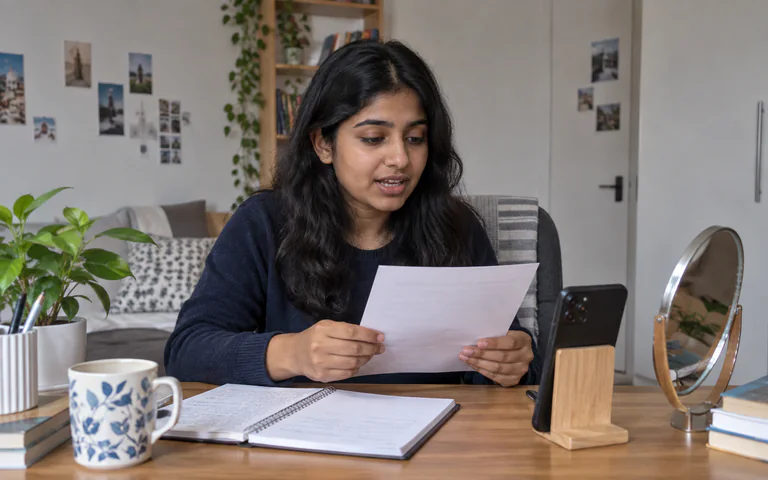
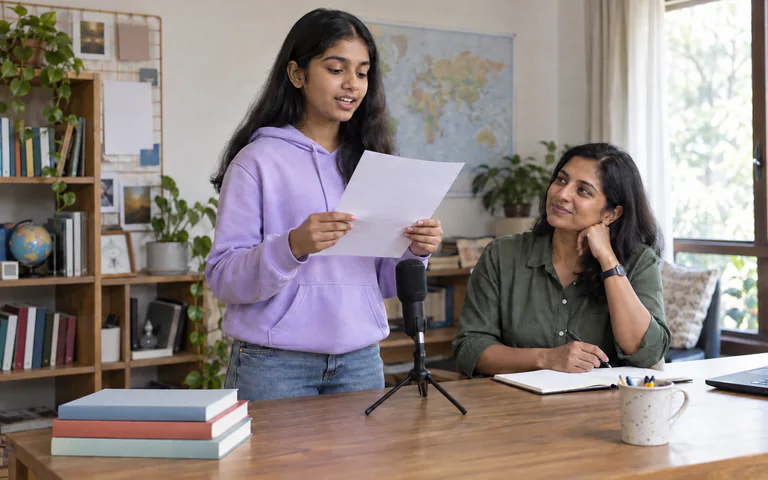
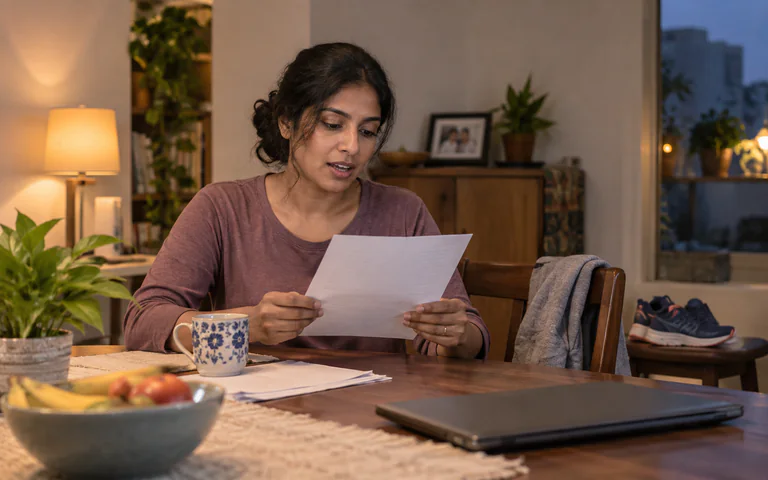

Science



Technology
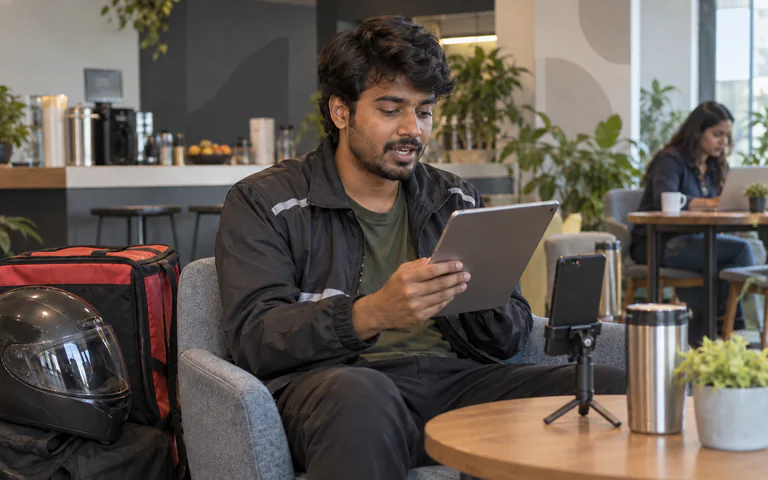


Pronunciation









Want something lighter first? There is a free read-aloud game you can play without an account — short lines, instant scoring, no setup. The scored passages on this page are the longer, diagnostic version.
What you're scored on
A read-aloud report has four numbers, and knowing which one is low tells you what to practise — they are not interchangeable.
Accuracy
How close each word was to the expected pronunciation, scored per word rather than averaged into one verdict.
Fluency
Pace and pausing. Pausing at commas reads as fluent; pausing mid-phrase to decode the next word does not.
Completeness
The words that never arrived — skipped articles, dropped past-tense endings, swallowed plurals.
Prosody
Stress and intonation: whether the sentence lands with emphasis in the right place, or flat from end to end.
Read Aloud practice — common questions
How does pronunciation scoring work?
Your recording is aligned against the known text, so the engine knows exactly which word you were attempting at each moment. That is what makes per-word accuracy possible — and it is why a fixed passage gives a sharper report than free speech, where the system has to guess the target first.
Will it mark down my Indian accent?
No. The score reflects intelligibility against the expected sounds of the word, not proximity to any one national accent. What it does catch is dropped word endings, unstressed syllables landing in the wrong place, and consonants that merge — and those are worth fixing in any accent.
How long should a practice session be?
One passage properly is worth more than four passages quickly. Read it, read the marked-up result, re-record the worst sentence twice. Ten focused minutes a day changes more in a month than an hour on a Sunday.
Do I need headphones?
They help. A room with echo and a laptop microphone at arm’s length will cost you accuracy points that have nothing to do with your speech. Any wired or wireless headset with a microphone is enough.
Is there a version without an account?
There is a free read-aloud game you can play without signing in. It is a lighter, quicker format for the same habit; the scored passages here are the longer, diagnostic version and are part of Pro.