
The Berry Bushes
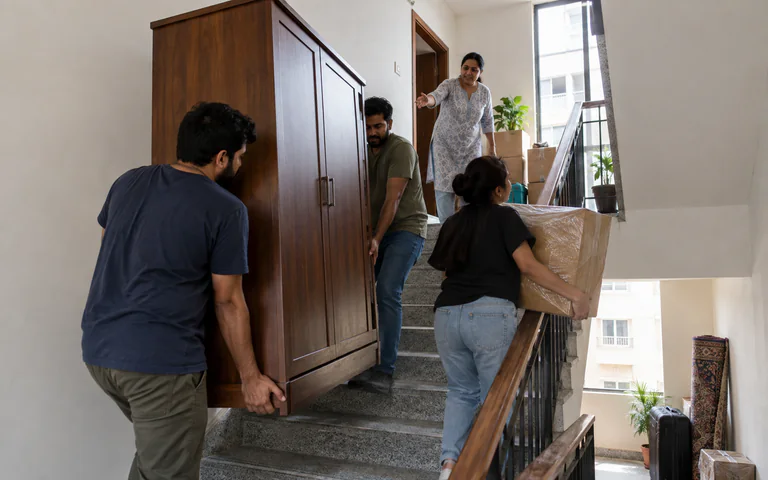
Two siblings walk to a weekend fair, buy plants and carry a heavy pot home for them.
An intermediate-level session of about 3 minutes. A 139-word passage, scored word by word.
Half of this set is not the problem. The lip-closing pair is stable for almost everybody: lips together, pressure, release, and the only difference between the two is whether the voice is switched on. It is the other half that gets pulled across, because a fricative made with the teeth against the lower lip takes more control than a plain closure does, and under pace the mouth reaches for the easier gesture. So what you are monitoring is not four sounds but two questions: whether the teeth genuinely make contact with the lip, and whether that contact lasts long enough to produce friction instead of a tap. The voiced fricative has a second escape route as well, drifting off towards a w whenever a rounded vowel follows it.
Angles worth taking
- Apply the holding test, since a closure cannot be prolonged and a fricative can, so try stretching each one.
- Keep the teeth resting on the lip right through the sound, rather than touching and releasing it like a stop.
- Where a contrasting pair falls within a word or two, leave a small gap instead of smoothing the line over.
- Accuracy on the harder half tends to slip in the closing lines, so listen to the end of the read first.
- Check voicing separately from place, because a hand on the throat tells you which member of a pair you produced.
- Keep the lips unrounded on the teeth-and-lip sounds, and let any rounding belong to the vowel that follows.
Phrases to reach for
These are shown to you before the session starts. They are what you are asked to use, not a list the scorer is checking off.
How the passage opens
Every Sunday my brother and I walk from the park to the village fair. He prefers the food stalls; I prefer the plant sellers near the far gate. Last week we bought a pair of berry bushes and a very…
Ready to speak?
Part of Pro. You need a TalkDrill account on a Pro plan to speak — reading this page does not.
Browse all read-aloud passagesThe format
Passage length
139 words
Modes
Learn (guided) · Mock (exam-real)
How a read-aloud session works
Pick a passage
Passages are graded from short and simple to long and dense. The length and the level are on every card.
Read it aloud
The text stays on screen while you record. Read at a normal pace — rushing to finish is itself one of the things being measured.
See it marked up
Every word comes back scored: accurate, unclear, or missed. The problem sounds are highlighted where they occurred.
Re-record the hard line
Go back to the sentence that scored worst and read it again. That single loop is where most of the improvement happens.
What you're scored on
A read-aloud report has four numbers, and knowing which one is low tells you what to practise — they are not interchangeable.
Keep the lips together for p and b, but let the top teeth touch the lower lip for f and v, especially where the two appear side by side.
Accuracy
How close each word was to the expected pronunciation, scored per word rather than averaged into one verdict.
Fluency
Pace and pausing. Pausing at commas reads as fluent; pausing mid-phrase to decode the next word does not.
Completeness
The words that never arrived — skipped articles, dropped past-tense endings, swallowed plurals.
Prosody
Stress and intonation: whether the sentence lands with emphasis in the right place, or flat from end to end.
More read-aloud passages




All read-aloud passages · Pronunciation passages · All speaking practice