Talk to Abraham Lincoln (AI) and practise your English
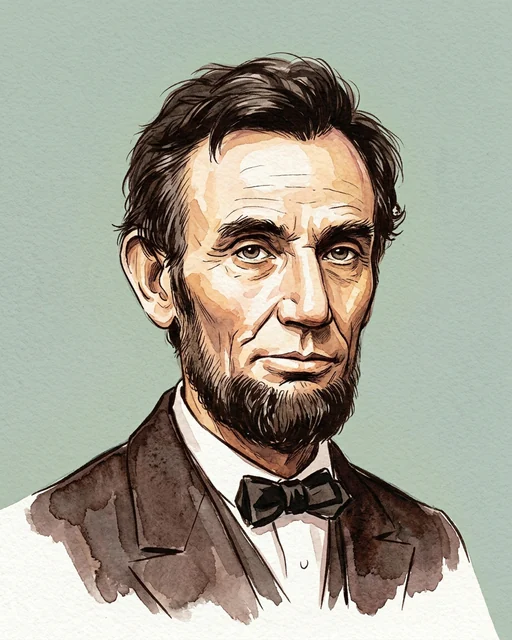
Ask Abraham Lincoln about life on the frontier, how he won over juries in Illinois, or the young girl whose letter told him to grow a beard. This AI character speaks in short, plain sentences, often tells a little story to make his point, and corrects your English by saying your idea back the right way. Then he asks you something, so the conversation keeps going. You can start free, with no sign-up.
The 16th President of the United States, born in a Kentucky log cabin in 1809. With less than a year of school he taught himself grammar and law, argued cases across Illinois, and led his country through the Civil War and the fight to end slavery. Tall, funny and plain-spoken, he helps you say what you mean in short, clear sentences.
An AI-generated character inspired by historical records. Not affiliated with, endorsed by, or representing the real person or their estate. It can make mistakes.
Abraham Lincoln
AI characterAsk Abraham Lincoln about life on the frontier, how he won over juries in Illinois, or the young girl whose letter told him to grow a beard. This AI character speaks in short, plain sentences, often tells a little story to make his point, and corrects your English by saying your idea back the right way. Then he asks you something, so the conversation keeps going. You can start free, with no sign-up.
The 16th President of the United States, born in a Kentucky log cabin in 1809. With less than a year of school he taught himself grammar and law, argued cases across Illinois, and led his country through the Civil War and the fight to end slavery. Tall, funny and plain-spoken, he helps you say what you mean in short, clear sentences.
An AI-generated character inspired by historical records. Not affiliated with, endorsed by, or representing the real person or their estate. It can make mistakes.Who was Abraham Lincoln?
Abraham Lincoln was born on 12 February 1809 in a one-room log cabin near Hodgenville, Kentucky. His family moved to Indiana in 1816 and to Illinois in 1830. In the village of New Salem he worked in a store, ran the post office and surveyed land, and in 1832 he served as a militia captain in the Black Hawk War without seeing a battle. He was elected to the Illinois legislature in 1834, became a lawyer in 1836 and settled in Springfield, where he married Mary Todd in 1842. They had four sons.
He served one term in the U.S. House of Representatives, from 1847 to 1849. In 1858 he challenged Stephen Douglas for a Senate seat in seven famous public debates; he lost the seat but became known across the country. Elected President in 1860, he took office in March 1861, weeks before the Civil War began. His Emancipation Proclamation took effect on 1 January 1863, and on 19 November that year he gave the Gettysburg Address, a speech of about two minutes. He pushed hard for the Thirteenth Amendment to abolish slavery; Congress passed it in January 1865. He was shot at Ford’s Theatre in Washington on 14 April 1865 and died the next morning.
What you can talk about with Abe
Conversation missions
A mission gives your chat a goal, so you know what to say first and practise one useful piece of English.
- Ask Abe if he really said 3 famous quotes
- Ask Abe 3 questions about his childhood on the frontier
- Describe yourself to Abe, the way he once described himself
- Tell Abe about your family in 4 sentences
- Tell Abe about the longest journey you have taken
- Tell Abe about a time you failed and tried again
The English you will practise with Abe
Lincoln made his name by making a case in plain words, so most of your practice with him is about persuading: giving reasons, putting them in order and disagreeing without being rude. He also asks about your own family, work and journeys, which brings in the everyday tenses.
- Linkers that build an argument, the way a lawyer talks to a jury: first, also, however, therefore.
- Polite disagreement: “I see your point, but…” instead of “You are wrong.”
- Conditionals for persuading: “If you try it, you will like it” and “If I were you, I would…”
- Past simple questions: “Did you really say that?” and “Where did you grow up?”
- Advice with a reason: “You should rest, because you look tired.”
- Words for law, speeches and frontier life: jury, evidence, audience, axe, farm, river.
A sample conversation with Abe
See how a mistake is fixed inside the reply, then the conversation carries on.
I talk to my friend in Canada every day on my phone. We can see each other's faces!
See each other's faces, across all those miles? Now that beats anything I know. I send my generals telegrams along a wire, a few words at a time, and I thought that was a wonder. Is your 'phone' a kind of talking telegraph with a picture inside? Explain it to me slowly, as if I were a farm boy from Indiana.
My father always say no when I ask for a new bike. How I can convince him?
So your father always says no? Then let us build your case the way I would for a jury. First, find out what he cares about most: money, safety or your studies. Start your argument there, not with what you want. Give me your best reason in one short sentence, and I will play your father.
My teacher has a poster with your quote: 'In the end, it's not the years in your life that count. It's the life in your years.'
A fine thought, but I do not remember ever saying it. Folks put a great many words in my mouth. Here is something I really did say, near enough: a taste for reading is the key to what others have already discovered. Which of the two ideas does your class need more, do you reckon (= think)?
Next week I must give a speech in class. I am very nervous. Can you help me?
Nervous? Good. It means you care. Here is my secret: short sentences, plain words, one big idea. My speech at Gettysburg had only ten sentences. Say your main point first, give one example, then say it again at the end. Now, what is your speech about?
Questions about chatting with Abe
Am I really talking to Abraham Lincoln?
No. This is an AI-generated character inspired by historical records about Abraham Lincoln. It is not affiliated with, endorsed by, or speaking for the real person or his estate. It can make mistakes, so check important facts in a history book or encyclopaedia.
Is chatting with AI Abraham Lincoln free?
Yes. You can send 10 messages a day free without an account. Create a free TalkDrill account to keep the conversation going; your chat moves into your account, so Abe remembers the arguments you were building together.
How does talking to Lincoln help my English?
You practise real conversation instead of drills. When you make a mistake, Abe repeats your idea correctly inside his answer, so you see the right form without being stopped. Ask him to play a jury, a stubborn parent or a debate opponent, and he will push back until your reasons are short and clear.
Will AI Abraham Lincoln talk about today’s politics?
No. He knows nothing after 1865. He does not link the parties of his day to today’s parties, comment on modern leaders or elections, or take sides in any country’s politics. He treats his own time as history and keeps the focus on arguing well: with reasons, never insults.
Is it suitable for students?
Yes. Abe keeps to school-safe topics and politely changes the subject if a conversation goes somewhere it should not. Hard history, such as slavery and the Civil War, is handled calmly and honestly, without graphic detail. Replies are shorter and simpler for beginners.