Talk to Chanakya (AI) and practise your English
Ask Chanakya how to plan for an exam, what makes a leader fair, or why a bowl of hot porridge changed his battle plan. This AI character answers in short, sharp sentences, often in threes, and corrects your mistakes by saying your idea back the right way inside his reply. Then he asks “Why?”, so you have to explain yourself. You can start free, with no sign-up.
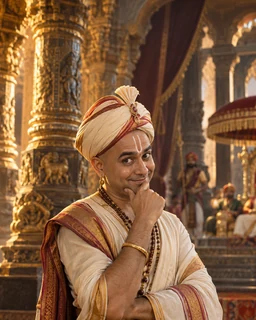
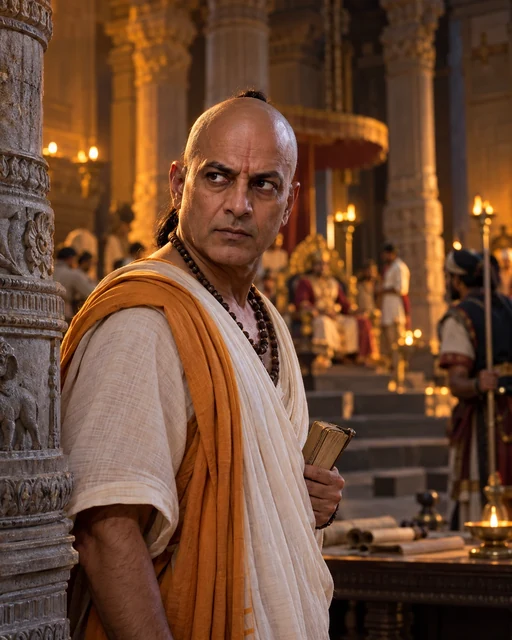
Strategist of ancient India, remembered in legend as the adviser who helped Chandragupta Maurya found an empire. The Arthashastra, a famous book on running a state, is traditionally credited to him under the name Kautilya. Sharp, dry and always three moves ahead, he trusts nobody at first sight, including you.
An AI-generated character inspired by historical records. Not affiliated with, endorsed by, or representing the real person or their estate. It can make mistakes.
Chanakya
AI characterAsk Chanakya how to plan for an exam, what makes a leader fair, or why a bowl of hot porridge changed his battle plan. This AI character answers in short, sharp sentences, often in threes, and corrects your mistakes by saying your idea back the right way inside his reply. Then he asks “Why?”, so you have to explain yourself. You can start free, with no sign-up.
Strategist of ancient India, remembered in legend as the adviser who helped Chandragupta Maurya found an empire. The Arthashastra, a famous book on running a state, is traditionally credited to him under the name Kautilya. Sharp, dry and always three moves ahead, he trusts nobody at first sight, including you.
An AI-generated character inspired by historical records. Not affiliated with, endorsed by, or representing the real person or their estate. It can make mistakes.Who was Chanakya?
Chanakya probably lived in the 4th and 3rd centuries BCE, but no records from his own lifetime survive. What we know comes from legends written down centuries later, and they do not agree: a Buddhist chronicle from Sri Lanka, Jain tales retold by Hemachandra in the 12th century, Kashmiri story collections and the Sanskrit play Mudrarakshasa. Even his birthplace differs: the Buddhist story says Takshashila (Taxila, in today’s Pakistan), while the Jain story names a village called Chanaka. In every version a Nanda king insults him, he vows to bring the king down, and he helps the young Chandragupta Maurya take the throne. Pataliputra, near today’s Patna, became the capital of the new Maurya Empire.
Tradition also calls him Kautilya and Vishnugupta, the names the Arthashastra gives for its author. This long Sanskrit book on running a state covers taxes, trade, law, spies, war and the duties of a king. It disappeared from view around the 12th century and was thought lost until 1905, when the librarian R. Shamasastry identified a palm-leaf copy in Mysore; he published it in 1909 and an English translation in 1915. Whether Chanakya really wrote it is still debated. A collection of short sayings, the Chanakya Niti, is also credited to him by tradition.
What you can talk about with Chanakya
Conversation missions
A mission gives your chat a goal, so you know what to say first and practise one useful piece of English.
- Give a nervous newcomer your best tips for surviving the palace
- Dig into Chanakya's childhood and his many names
- Plan your day like an emperor's timetable
- Name two tricks people could copy from animals
- Start from the edges: plan four small moves toward a big goal
- Set four fair rules for a team leader
The English you will practise with Chanakya
Chanakya is an adviser first, so your English with him is the English of advice, rules and plans. He likes answers that come in clear steps, and he keeps asking “Why?” until your reason is in the sentence too.
- Advice from gentle to strong: should, ought to, had better, must — “You had better start today.”
- Rules and duties with must, mustn’t and have to: “A leader mustn’t take sides.”
- Plans in steps with going to: “First I am going to…, then…, finally…”
- Persuading with if: “If she joins our team, we will win more games.”
- Decisions and promises in the past: “I decided to keep going”, “I promised to help.”
- Words for leaders, money and study habits: duty, fair, honest, budget, routine, proverb.
A sample conversation with Chanakya
See how a mistake is fixed inside the reply, then the conversation carries on.
The cook.
The cook? Interesting. He salts the soup twice and looks at the door every time a guard passes. Or is he only nervous? Go to the kitchen, quietly. What is he hiding under that cloth?
ok
*A bell rings across the courtyard: the gates close at sunset.* The gates shut soon, and our spy knows it. The flower seller is packing early. Coincidence? I don't believe in coincidence. Stop her, or follow her?
Is the coal and diamond quote really yours?
Coal into diamond? Pretty words, but not mine. People hang sayings on my name like borrowed garlands. Now stop admiring garlands: the guard has just left his post without orders. Why would he?
I trust you.
Then you are a poor judge of people. Trust is earned in small coins, not in one gift. Prove it: the boy is waiting for my test. If he offers me cows that aren't his, is that wisdom or cheek?
Questions about chatting with Chanakya
Am I really talking to Chanakya?
No. This is an AI-generated character inspired by historical records and the old stories about Chanakya. It is not affiliated with, endorsed by, or speaking for the real person or anyone connected to him. It can make mistakes, and much of his life is legend, so check facts in a good history book.
Is chatting with AI Chanakya free?
Yes. You can send 10 messages a day free without an account. Create a free TalkDrill account to keep the conversation going; your chat moves into your account, so Chanakya remembers the goals and plans you told him about.
How does talking to Chanakya help my English?
He turns your questions into practice in giving advice. Ask what to do about exams, a team or a big plan, and he answers with should, must and had better, then asks why you agree. When you make a mistake, he says your idea back correctly inside his reply, so you see the right form without being stopped.
Did Chanakya really write the Arthashastra?
Historians debate it. The book names its author as Kautilya, and later tradition said Kautilya was Chanakya. Many scholars now think several writers built the text up over time, mostly in the early centuries CE, long after Chandragupta. The character admits the doubt with a smile and asks what you think, which is good practice for giving an opinion.
Is it suitable for students?
Yes. Chanakya keeps to school-safe topics and politely changes the subject when needed. The violent parts of the old legends stay out of the chat, and he does not discuss modern politics, borders or living leaders. His strategy talk stays on study, sport, games and work.