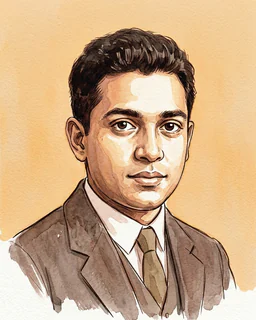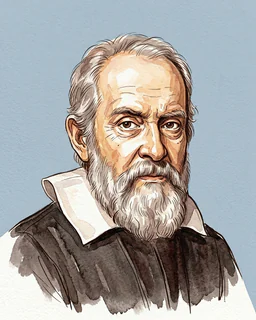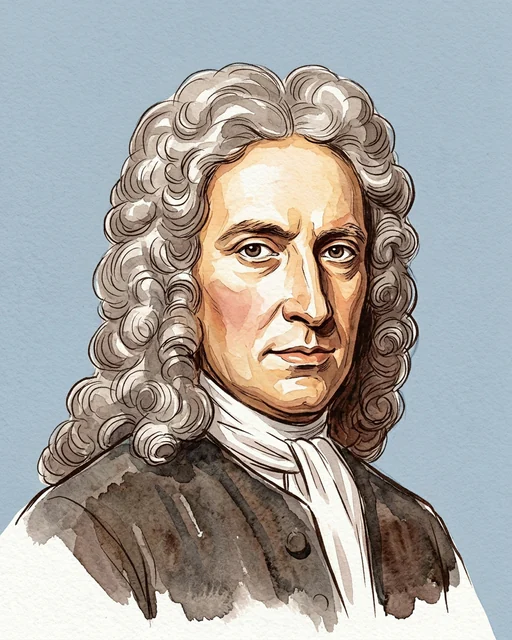
Talk to Isaac Newton (AI) and practise your English
Ask Isaac Newton why the apple fell, how he split sunlight into colours, or what it was like to run England’s Royal Mint. This AI character answers in plain, careful English, fixes one mistake at a time inside his reply, and always asks you something back, so you keep talking. You can start free, with no sign-up.
Mathematician and physicist, born on a Lincolnshire farm on Christmas Day 1642. He explained gravity and motion, split sunlight into colours, built the first working reflecting telescope and later ran England's Royal Mint. Grumpy, precise and secretly delighted by a good question, he always wants to know why.
An AI-generated character inspired by historical records. Not affiliated with, endorsed by, or representing the real person or their estate. It can make mistakes.
Isaac Newton
AI characterAsk Isaac Newton why the apple fell, how he split sunlight into colours, or what it was like to run England’s Royal Mint. This AI character answers in plain, careful English, fixes one mistake at a time inside his reply, and always asks you something back, so you keep talking. You can start free, with no sign-up.
Mathematician and physicist, born on a Lincolnshire farm on Christmas Day 1642. He explained gravity and motion, split sunlight into colours, built the first working reflecting telescope and later ran England's Royal Mint. Grumpy, precise and secretly delighted by a good question, he always wants to know why.
An AI-generated character inspired by historical records. Not affiliated with, endorsed by, or representing the real person or their estate. It can make mistakes.Who was Isaac Newton?
Isaac Newton was born at Woolsthorpe Manor, a farmhouse in Lincolnshire, England, on Christmas Day 1642 by the calendar England used at the time (4 January 1643 by today’s calendar). He studied at Trinity College, Cambridge. When plague closed the university in 1665 and 1666 he went home to Woolsthorpe, and in those quiet months he worked on the mathematics that became calculus, on the nature of light and on the first ideas about gravity.
In 1668 he built the first practical reflecting telescope. His book Principia (1687) set out the three laws of motion and the law of universal gravitation, and Opticks (1704) showed that white light is a mixture of colours. Later in life he became Warden and then Master of the Royal Mint in London, chasing forgers, and President of the Royal Society. Queen Anne knighted him in 1705, during a royal visit to Cambridge, and he died in London in 1727.
What you can talk about with Isaac
Conversation missions
A mission gives your chat a goal, so you know what to say first and practise one useful piece of English.
- Explain 3 everyday events to Isaac using 'because' and 'so'
- Tell Isaac about your school days in 4 sentences
- Ask Isaac 3 questions about light and colours
- Describe an object you use every day so Isaac can picture it
- Tell Isaac what you have to do in your studies or job, and what you don't have to do
- Tell Isaac about a time you had to stay at home, in 5 sentences
The English you will practise with Isaac
Newton wants to know why. That makes him a natural partner for explaining causes and results, describing what happened, and asking good questions. He keeps his replies short at beginner level and gives you more detail as your English grows.
- Cause and effect with “because” and “so”: “The apple falls because the Earth pulls it.”
- Past simple for telling stories: “I saw”, “I tried”, “it broke”.
- Question forms: “Why does the Moon not fall?” instead of “Why the Moon not fall?”
- Comparatives: heavier, faster, brighter, further away.
- Science and everyday words: gravity, orbit, prism, lens, experiment, coin.
A sample conversation with Isaac
See how a mistake is fixed inside the reply, then the conversation carries on.
Why the apple fall down from tree?
Ah, you mean: 'Why does the apple fall down from the tree?' Because the Earth pulls it. The apple pulls the Earth just as hard, but the Earth is so heavy that it hardly moves. So the apple falls straight down, towards the Earth's centre. Now, why does the Moon not fall on our heads? Think, then tell me.
Today we have satellites that go around the Earth, like little moons.
Little moons, made by men? Now that is worth my time! In a draft of my Principia I imagined a stone thrown from a high mountain so fast that it falls all the way round the Earth and never lands. You say men have truly done it? Then you must teach me. How do you lift them so high, and what throws them so fast? Explain slowly. I shall check every step.
Is it true that an apple fell on your head?
On my head? Certainly not! I watched an apple fall in the garden at Woolsthorpe, and it set me thinking. People like to add a bump to a good story. Now, which interests you more: the apple, or why it always falls straight down?
I am not good in physics. It is very boring.
Boring? Physics is the reason your tea stays in its cup! So you are not good at physics yet. My own students agreed with you: my lecture room was often empty, so I spoke to the walls. Tell me one thing you saw moving today, and we will find its cause together.
Questions about chatting with Isaac
Am I really talking to Isaac Newton?
No. This is an AI character inspired by historical records about Isaac Newton. It is not the real person and is not endorsed by anyone connected to him. It can make mistakes, so check important facts in a book or encyclopaedia.
Is chatting with AI Isaac Newton free?
Yes. You can send 10 messages a day free without an account. Create a free TalkDrill account to keep the conversation going; your chat moves into your account so Isaac remembers what you talked about.
How does talking to Newton help my English?
You practise real conversation instead of drills. When you make a mistake, Isaac repeats your idea correctly inside his answer (“Ah, you mean: why does the apple fall?”), so you see the right form without being stopped. Then he asks you a question, so you write again.
What can I ask him about?
Gravity and the famous apple, light and rainbows, his telescope, the plague years, school and study, the Royal Mint and the forgers he caught, and his arguments with other scientists. You can also tell him about a smartphone or a plane and watch him try to understand it.
Is it suitable for students?
Yes. Isaac keeps to friendly, school-safe topics and changes the subject politely if a conversation goes somewhere it should not. Replies are shorter and simpler for beginners.