
Product Manager behavioral round
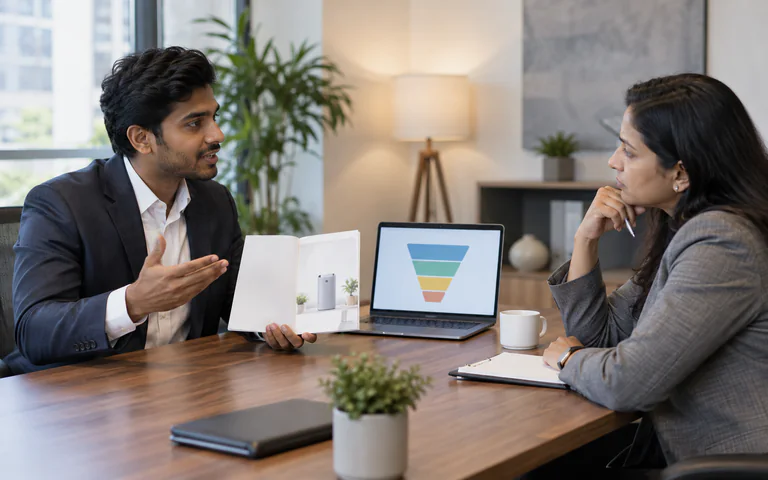
A behavioral interview for a Product Manager role at a mid-stage tech startup in India.
An advanced-level session of about 15 minutes.
A product behavioural round is an audit of decisions, not of features. The VP is not really asking what you shipped; they are asking what you chose not to ship that quarter, and how you defended that to the person who wanted it. Every story therefore needs a fork in it. A candidate who narrates a launch from kickoff to release has described a project. A candidate who says which two things were cut, what the engineering lead said about the cut, and what the metric did afterwards has described a decision. Expect pressure on the parts product managers usually smooth over: the stakeholder who stayed unhappy, the number that moved for a reason you could not attribute, the call you got wrong. At this level of experience the failures are expected to arrive with the same specificity as the wins.
Angles worth taking
- Start each answer with the decision you owned — 'we decided' hides exactly the thing this round exists to find.
- Quantify the trade-off, not only the outcome: what the cut feature would have cost in weeks, and what you bought with those weeks.
- Name a stakeholder by their function and what they wanted. 'Sales wanted the enterprise gate' is a story; 'stakeholders were aligned' is not.
- When you give a success metric, give the baseline and the window with it — a number with no baseline is a hope.
- Keep one story where the data went against your instinct, including how long you resisted it before you turned.
- Answer 'what would you do differently' with a change to your process, not a wish: 'I would have run the pricing test before build'.
Who is in the room
You play
A PM candidate with 3-5 years of experience
You speak with
A VP of Product conducting a behavioral interview
Phrases to reach for
These are shown to you before the session starts. They are what you are asked to use, not a list the scorer is checking off.
Ready to speak?
Free to start. You need a TalkDrill account to speak — reading this page does not.
Browse all mock interview roundsThe format
Modes
Mock (exam-real)
How a mock interview session works
Pick a round
HR, behavioural, or a role-specific set. Each one tells you how many questions it runs and roughly how long it takes.
Answer out loud
Questions come one at a time and you speak the answer. There is a clock, because a two-minute answer and a five-minute answer are different answers.
Take the follow-ups
Answers get followed up. A vague claim gets pressed on, which is what separates a rehearsed answer from a true one.
Read the report
Structure, evidence, filler and pace per answer, plus the one answer worth recording again before the real thing.
What you're scored on
Every round is assessed the same way, because interviewers are broadly consistent about what a good spoken answer contains.
Demonstrate product thinking, stakeholder management, and data-driven decision making.
Structure
Whether the answer has a shape — situation, action, result — or arrives somewhere by accident after ninety seconds.
Evidence
Specifics over adjectives. "We cut it from six days to two" against "we improved the process significantly".
Relevance
Whether you answered the question asked, including the follow-up, rather than the question you prepared for.
Delivery
Pace, filler words, and whether the last third of the answer is as clear as the first.
More mock interview rounds





All mock interview rounds · Tech rounds · All speaking practice