
Describe a place in your city where you like to spend time
IELTS Speaking Part 2 cue card: Describe a place in your city where you like to spend time. One minute to prepare, up to two minutes to speak, then follow-up questions.
An intermediate-level session of about 8 minutes. Covers Part 2. 3 prompts in total.
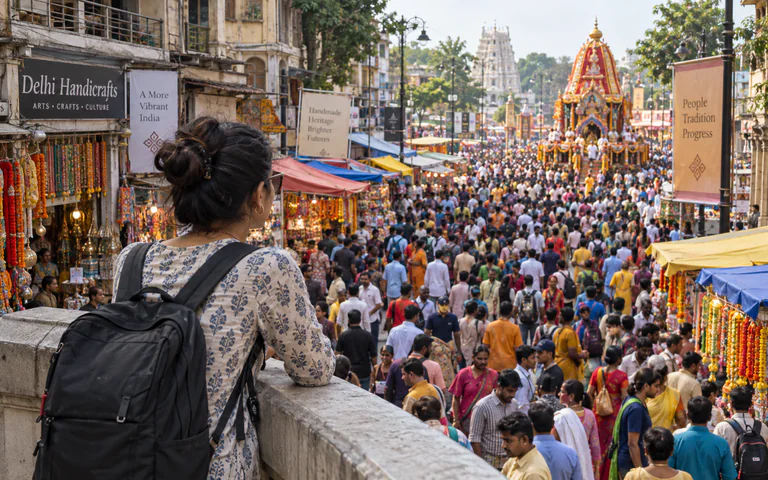
What it looks like is a real instruction, and it asks for things that can be counted or pointed at: the light at a particular hour, what the floor is made of, how loud it gets, who else is there on a weekday afternoon. Peaceful and beautiful summarise the place without showing it, and a listener cannot picture a summary. The other half of the card is habit. You like to spend time there, which means it happens repeatedly, and the language should show that — usually, most evenings, whenever an hour comes free. Both follow-ups reward whoever has been concrete. Whether you go alone or with others is simple once the place has people in it, and whether it has changed in recent years is simple once you have named something capable of changing: a stall that closed, a new floor, a fee at the gate.
Angles worth taking
- Choose somewhere you genuinely go often rather than the most photogenic spot in the city.
- Offer three physical details a stranger could verify — a bench, a smell, a queue, a particular noise.
- Put what you do there in the habitual present, with a frequency word attached to each activity.
- Locate it by what is nearby — the station, the market, the road you take — rather than by an address.
- If it is busy, describe the other people there; they are the easiest detail to make specific.
Ready to speak?
Free to start. You need a TalkDrill account to speak — reading this page does not.
Browse all IELTS Speaking testsThe format
Parts covered
2
Prompts in total
3
Modes
Learn (guided) · Mock (exam-real)
How a IELTS Speaking session works
Part 1 — the warm-up
Familiar questions about you: work, home, routines. Short answers, but not one-word ones. The examiner is calibrating to your voice.
Part 2 — the cue card
A topic card with prompts, one minute of prep with notes, then up to two minutes speaking without interruption.
Part 3 — the discussion
Abstract follow-ups on the Part 2 theme. Opinions, comparisons and speculation, where the higher bands are decided.
Your band estimate
A score on each of the four official criteria, what pulled it down, and the habit to change before you sit the real test.
What you're scored on
IELTS Speaking is marked on four criteria of equal weight. The estimate reports each one separately, because they rarely move together.
Speak for 1-2 minutes with clear structure and descriptive language.
Fluency and coherence
Whether you keep going, and whether the ideas connect. Hesitation while you search for a word costs less than hesitation while you search for a thought.
Lexical resource
Range and precision, including whether you can paraphrase around a word you do not have instead of stopping at it.
Grammatical range and accuracy
Variety of structures as well as correctness. All-simple-sentences and all-accurate caps out around band 6.
Pronunciation
Intelligibility, stress and intonation. Accent is not penalised; flat stress and swallowed word endings are.
More IELTS Speaking tests





All IELTS Speaking tests · Places tests · All speaking practice