

Welcome!
“Speak a little every day. Confidence follows practice.”
Congratulations on taking your first step toward speaking English! This book is designed for absolute beginners — people who know very little or no English at all. If you have been wanting to speak English but did not know where to start, you are in the right place.
This is a 30-day plan. Each day, you will learn a few simple phrases, see them used in a short conversation, and get a small practice task. By the end of 30 days, you will be able to have basic conversations in English with confidence.
How to Use This Book
1. Study one day at a time. Do not rush. Spend 20–30 minutes each day.
2. Read the phrases out loud. Speaking is the most important part.
3. Practice with the dialogues. Read both parts aloud.
4. Do the daily task. Real practice makes you better faster.
5. Complete the review exercises at the end of each week.
Chapter 1
Days 1–5 — Basic Greetings & Introductions
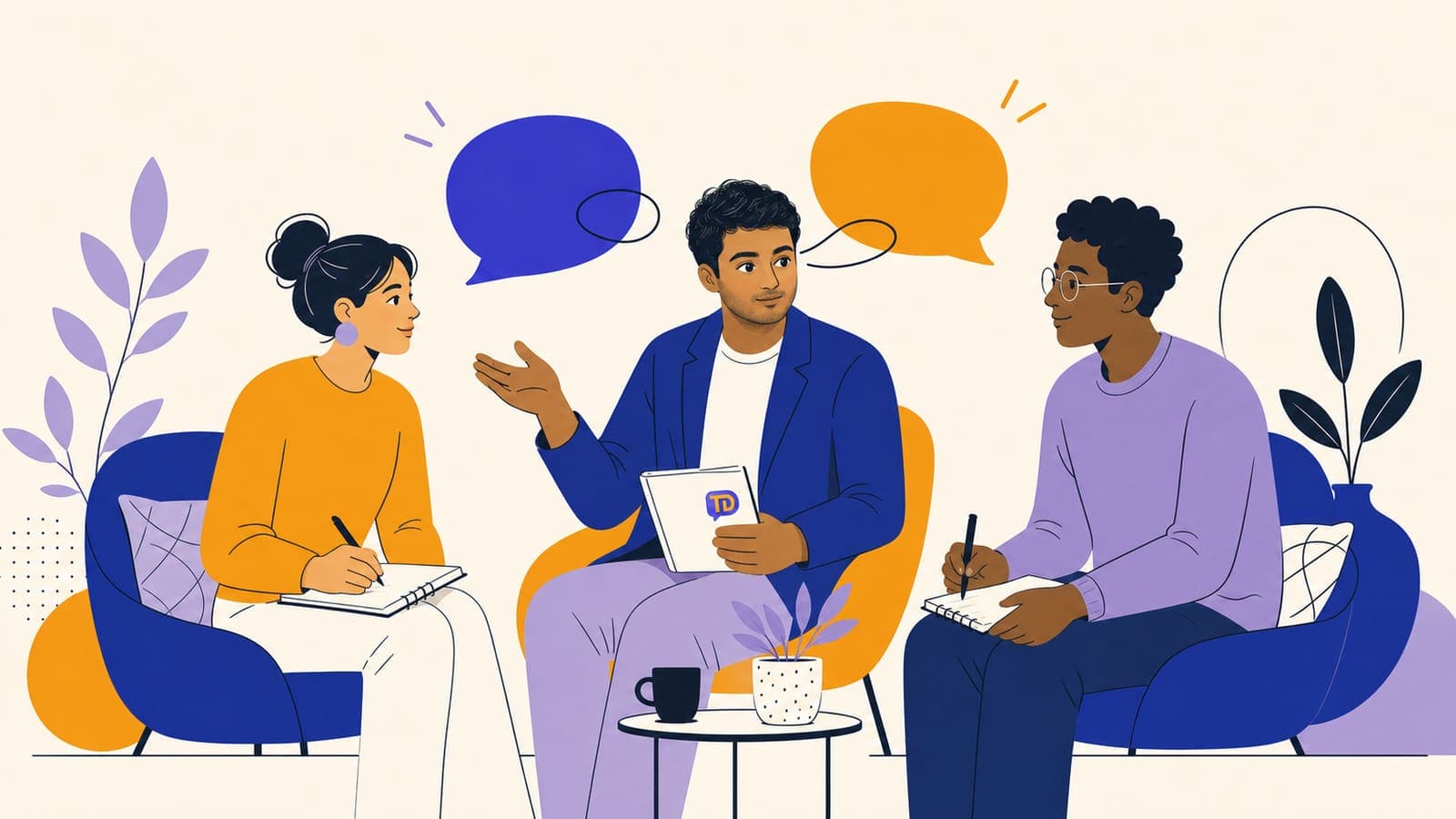
Start speaking with the greetings and polite phrases you need every day.
- Greet people at different times
- Introduce yourself and ask names
- Use please, thank you, sorry, and goodbye naturally
In this first week, you will learn how to greet people, introduce yourself, ask how someone is doing, use polite words, and say goodbye. These are the phrases you will use every single day.
Day 1: Hello, Hi, Good Morning / Afternoon / Evening
Today you will learn the most basic greetings in English. Just like we say "Namaste" in Hindi at any time, English has different greetings for different times of the day.
Key Phrases
“Hello!” — The most common greeting. Use it anytime, anywhere. [Namaste]
“Hi!” — A friendly, casual way to say hello. Use it with friends and people your age.
“Good morning!” — Use this from when you wake up until about 12 noon. [Suprabhat]
“Good afternoon!” — Use this from 12 noon until about 5 PM.
“Good evening!” — Use this after 5 PM.
“Hi there!” — A warm and friendly greeting.
“Hey!” — Very casual. Use only with close friends.
How to Respond
When someone greets you, simply say the same thing back! If someone says "Good morning!", you say "Good morning!" If someone says "Hello!", you say "Hello!" or "Hi!"
Mini Dialogue
Amit: Good morning!
Priya: Good morning! How are you?
Amit: I am fine, thank you!
Pronunciation Tips
“Hello” — Say it like "heh-LOH". Stress the second part.
“Good morning” — Say it like "gud MOR-ning". Keep it smooth.
“Good evening” — Say it like "gud EEV-ning". The “v” sound is soft.
Day 2: My Name Is… / I Am From… / Nice to Meet You
Today you will learn how to tell people your name and where you are from. This is how every conversation begins when you meet someone new.
Key Phrases
“My name is [your name].” — The basic way to introduce yourself. [Mera naam ___ hai]
“I am [your name].” — A shorter way to say the same thing.
“I am from [your city/country].” — Tell people where you come from. [Main ___ se hoon]
“Nice to meet you!” — Say this when you meet someone for the first time. [Aapse milkar khushi hui]
“Nice to meet you too!” — Say this when someone says “Nice to meet you” to you.
“What is your name?” — Ask someone their name. [Aapka naam kya hai?]
“Where are you from?” — Ask someone where they come from. [Aap kahan se hain?]
Mini Dialogue
Rahul: Hello! My name is Rahul. What is your name?
Sara: Hi! I am Sara. Nice to meet you, Rahul!
Rahul: Nice to meet you too! Where are you from?
Sara: I am from Mumbai. What about you?
Rahul: I am from Delhi.
Pronunciation Tips
“Nice to meet you” — Say it quickly like “NICE-tuh-MEET-yoo”. It flows together.
“I am from” — You can say it fast like “I’m from”. This is called a contraction.
Day 3: How Are You? / I’m Fine / What About You?
Today you will learn the most common conversation after greeting someone. Almost every English conversation includes “How are you?”
Key Phrases
“How are you?” — The standard way to ask someone how they are feeling. [Aap kaise hain?]
“I’m fine, thank you.” — The most common answer.
“I’m good, thanks!” — A casual answer for friends.
“I’m great!” — When you are feeling very happy.
“I’m okay.” — When you are not great but not bad.
“Not bad.” — A casual way to say you are doing okay.
“What about you?” — Ask the same question back. [Aur aap?]
“And you?” — A shorter way to ask the same question back.
Mini Dialogue
Teacher: Good morning, Anita! How are you?
Anita: Good morning, Ma’am! I’m fine, thank you. How are you?
Teacher: I’m great, thank you! Ready for class?
Anita: Yes, Ma’am!
Important Note
In English, “How are you?” is often just a greeting. People do not always expect a long answer. A simple “I’m fine, thank you” is perfect. You do not need to tell them about your problems unless they are a close friend!
Day 4: Please, Thank You, Sorry, Excuse Me
Today you will learn the most important polite words in English. Using these words shows respect and makes people like talking to you. In Hindi, we say “Dhanyavaad”, “Kripya”, “Maaf kijiye” — English has the same idea!
Key Phrases
“Please” — Use this when you ask for something. It makes your request polite. [Kripya]
“Thank you” — Use this when someone helps you or gives you something. [Dhanyavaad]
“Thanks!” — A casual way to say thank you, used with friends.
“Thank you so much!” — When you are very grateful.
“You’re welcome.” — Say this when someone thanks you. [Koi baat nahi]
“Sorry” — Use this when you make a mistake or bump into someone. [Maaf kijiye]
“I’m sorry.” — A more serious way to apologize.
“Excuse me” — Use this to get someone’s attention or to pass through a crowd. [Suniye / Zara rasta dijiye]
“No problem!” — Another way to respond to “Thank you” or “Sorry”.
Mini Dialogue — At a Tea Stall
You: Excuse me, one tea please.
Tea Seller: Here you go.
You: Thank you!
Tea Seller: You’re welcome.
Mini Dialogue — On a Bus
You: Excuse me, is this seat free?
Stranger: Yes, please sit.
You: Thank you!
Stranger: No problem!
Day 5: Goodbye Phrases + Week 1 Review
Today is the last day of your first week! You will learn how to say goodbye, and then we will review everything from Days 1–4.
Key Phrases — Saying Goodbye
“Goodbye!” — The standard way to say bye. [Alvida]
“Bye!” — Short and casual.
“Bye bye!” — Friendly and warm.
“See you!” — When you will meet the person again. [Phir milenge]
“See you later!” — When you will meet them again soon.
“See you tomorrow!” — When you will meet them the next day.
“Good night!” — Say this when leaving at night or before going to sleep. [Shubh ratri]
“Take care!” — A warm way to say goodbye. [Apna khayal rakhna]
“Have a nice day!” — A polite way to end a conversation.
Mini Dialogue — End of the Day
Raj: Okay, I have to go now. Bye!
Neha: Bye! See you tomorrow!
Raj: Yes, see you tomorrow. Take care!
Neha: You too! Good night!
Week 1 Review
Let us see how much you remember! Try these exercises without looking at the earlier days.
Week 1 Review Exercise
Answer each question before revealing the model answer.
How do you greet someone in the morning? ___________
Reveal answer to 1
Good morning!
How do you greet someone in the evening? ___________
Reveal answer to 2
Good evening!
How do you introduce yourself? My _________ is ___________.
Reveal answer to 3
My name is [your name].
How do you ask someone’s name? What is _________ ___________?
Reveal answer to 4
What is your name?
What do you say when you meet someone for the first time? Nice to ___________ ___________!
Reveal answer to 5
Nice to meet you!
How do you ask “Aap kaise hain?” in English? ___________ ___________ ___________?
Reveal answer to 6
How are you?
What is the polite word you use when asking for something? ___________
Reveal answer to 7
Please
What do you say when someone helps you? ___________ ___________!
Reveal answer to 8
Thank you!
How do you say “Maaf kijiye” in English? ___________
Reveal answer to 9
Sorry / I’m sorry
How do you say goodbye to someone at night? ___________ ___________!
Reveal answer to 10
Good night!
Key takeaways
- Review the phrases from days 1–5 — basic greetings & introductions.
- Read every mini-dialogue aloud, including both speakers.
- Make one new sentence about your own life.
- Repeat difficult words slowly before saying the full sentence.
- Use the review quiz to decide what to practise again.
5 of 30 · 17%
You have completed the speaking plan through Day 5.