

Introduction
“A word you can say out loud is worth ten you can only recognise.”
This book gives you 500 English words that come up in ordinary Indian life - at home, at work, at the shop, at the clinic, on the phone. Not exam words. The words you need on a Tuesday.
Every word arrives as a card: how it sounds, what it means in plain language, the forms it takes, two real sentences, and one note on how people actually use it.
How to use this book
- Take ten words at a time, not fifty.
- Say every word out loud - reading it silently teaches your eyes, not your mouth.
- Cover the meaning and test yourself on the word alone.
- Use three of the day's words in a real conversation before you sleep.
- Take the chapter quiz only after you can say all fifty words without stopping.
Chapter 1
Home and Daily Routine
The English you need most is the English you live with every morning - the alarm, the bucket, the kettle and the people around you.
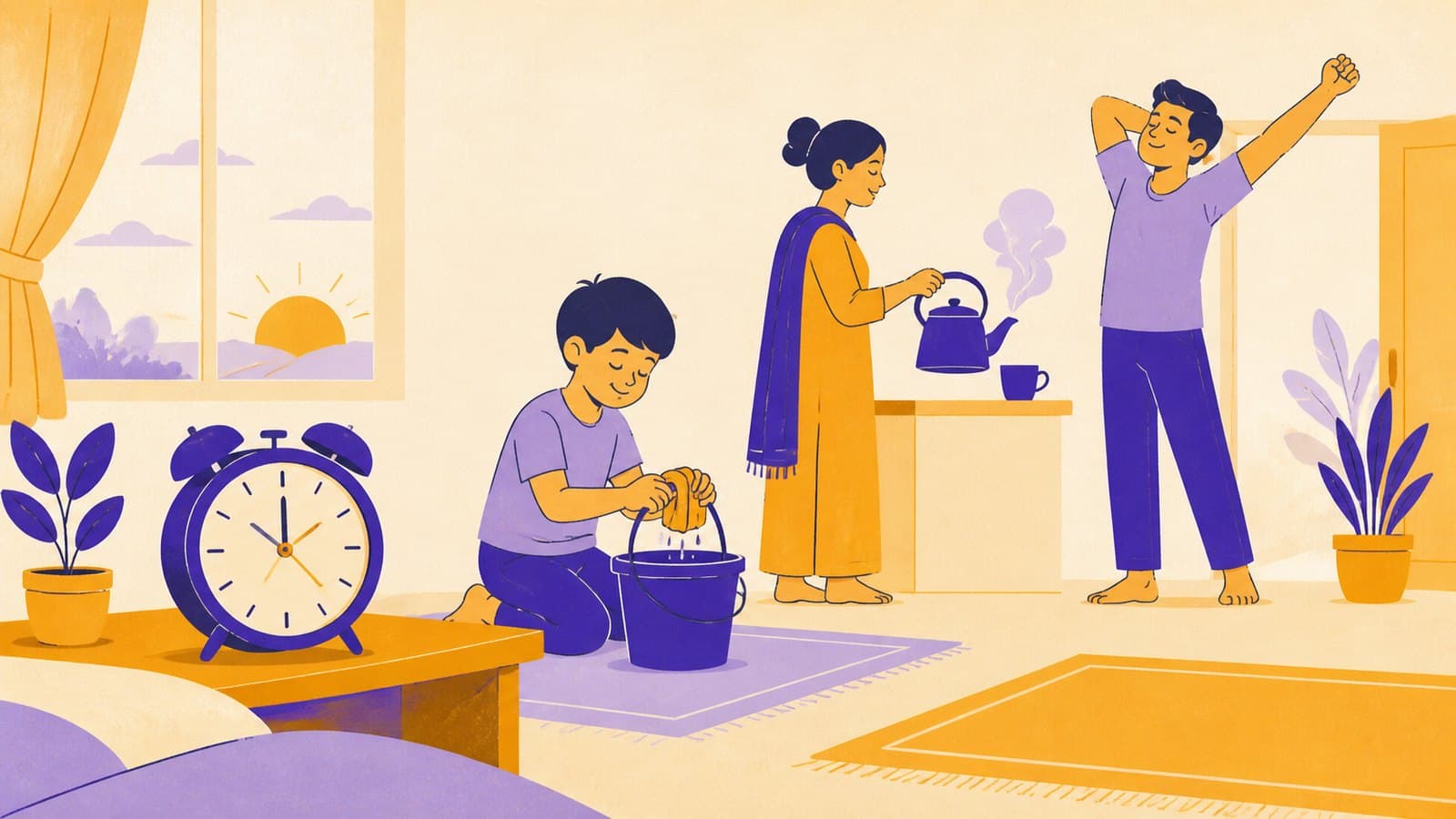
- Describe your morning routine from waking up to leaving home
- Name the everyday objects in your kitchen, bathroom and bedroom
- Talk about household chores with the correct verb for each job
- Say who lives in your home and how you are related to them
- Avoid the common mistakes learners make with switches, taps and laundry
wake
/weɪk/
Meaning
To stop sleeping, or to make another person stop sleeping.
In a sentence
At home
“I wake at six every morning to get ready for office.”
Morning
“Please wake me if I do not hear the alarm.”
In practice: In everyday speech the phrasal verb 'wake up' is far more common: 'I wake up early', 'Wake him up'.
alarm
/əˈlɑːm/
Meaning
A sound set on a clock or phone to wake you or remind you of something.
In a sentence
Morning
“My alarm rings at 5.45 every weekday.”
At home
“She set an alarm so she would not forget the milk delivery.”
In practice: You 'set' an alarm and it 'goes off' or 'rings'. Never say 'open the alarm'.
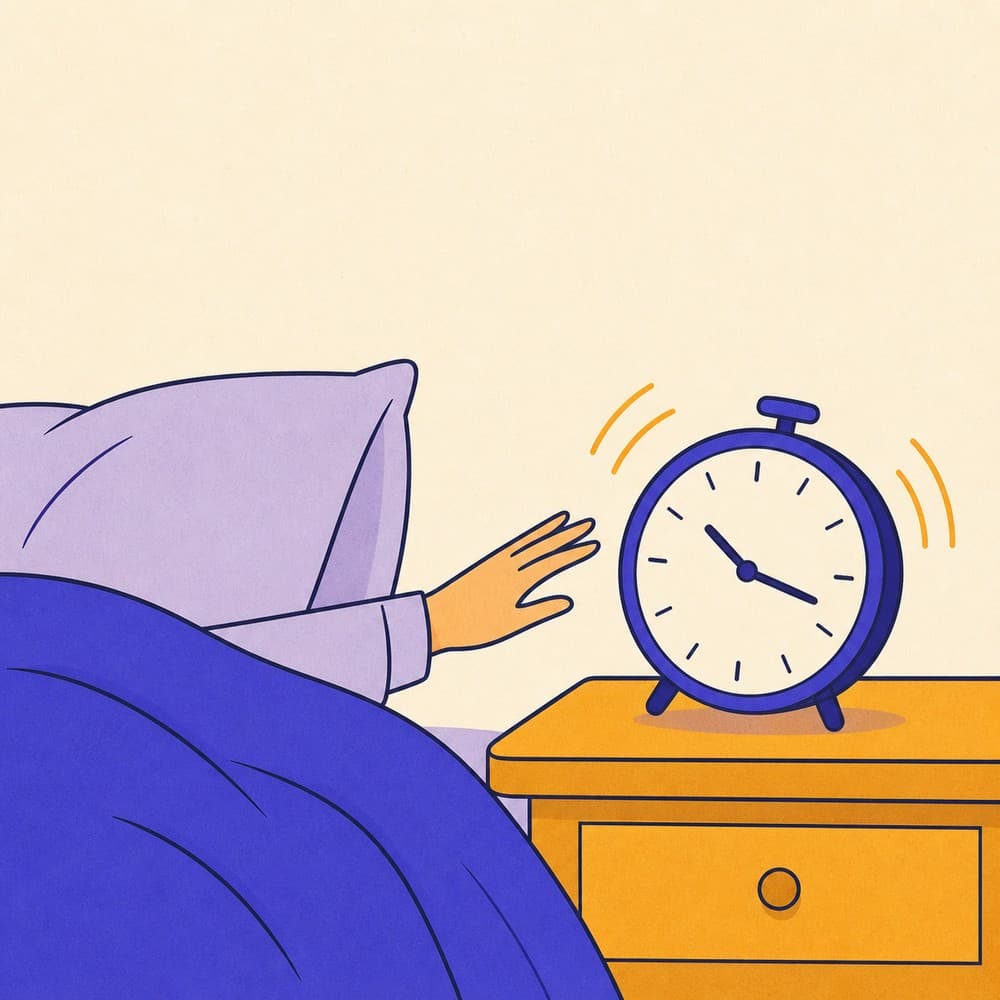
snooze
/snuːz/
Meaning
To sleep for a few more minutes, especially after an alarm has rung.
In a sentence
Morning
“I pressed snooze three times and then had to run.”
At home
“He likes to snooze for ten minutes before getting out of bed.”
In practice: 'Snooze' is friendly and informal. In a formal message, write 'I woke up late' instead.
oversleep
/ˌəʊ.vəˈsliːp/
Meaning
To sleep longer than you had planned.
In a sentence
Morning
“The power went off, my alarm did not ring and I overslept.”
At home
“If you sleep very late, you may oversleep tomorrow.”
In practice: It is one word and takes no extra particle: say 'I overslept', not 'I over slept up'.
routine
/ruːˈtiːn/
Meaning
The set of things you do regularly, usually in the same order.
In a sentence
At home
“My morning routine takes about forty minutes.”
Daily life
“A simple evening routine helps me sleep better.”
In practice: Common pairs are 'daily routine' and 'morning routine'. As an adjective it means ordinary, as in 'a routine check'.
brush
/brʌʃ/
Meaning
To clean something with a brush, especially your teeth or hair; also the tool itself.
In a sentence
Morning
“I brush my teeth after breakfast and again at night.”
Bathroom
“Keep the brush in the mug beside the basin.”
In practice: Say 'brush my teeth', not 'do brushing'. The noun form is 'brushing': 'twice-daily brushing'.
comb
/kəʊm/
Meaning
To make hair neat with a flat tool that has thin teeth; also the tool itself.
In a sentence
Morning
“She combs her hair before leaving for work.”
At home
“The comb is on the shelf near the mirror.”
In practice: The 'b' is silent. Say it like 'kohm', never 'komb'.
shower
/ˈʃaʊ.ə/
Meaning
To wash your whole body under falling water; also the fitting that sprays the water.
In a sentence
Morning
“I shower quickly when the water is cold.”
Bathroom
“There is no hot water in the shower today.”
In practice: British English says 'have a shower'; American English says 'take a shower'. Both are understood everywhere.
shave
/ʃeɪv/
Meaning
To remove hair from the face or body with a razor.
In a sentence
Morning
“He shaves every second day.”
At home
“I forgot to shave before the video call.”
In practice: You can 'shave' or 'have a shave'. 'Shaving' also names the kit: shaving cream, shaving brush.
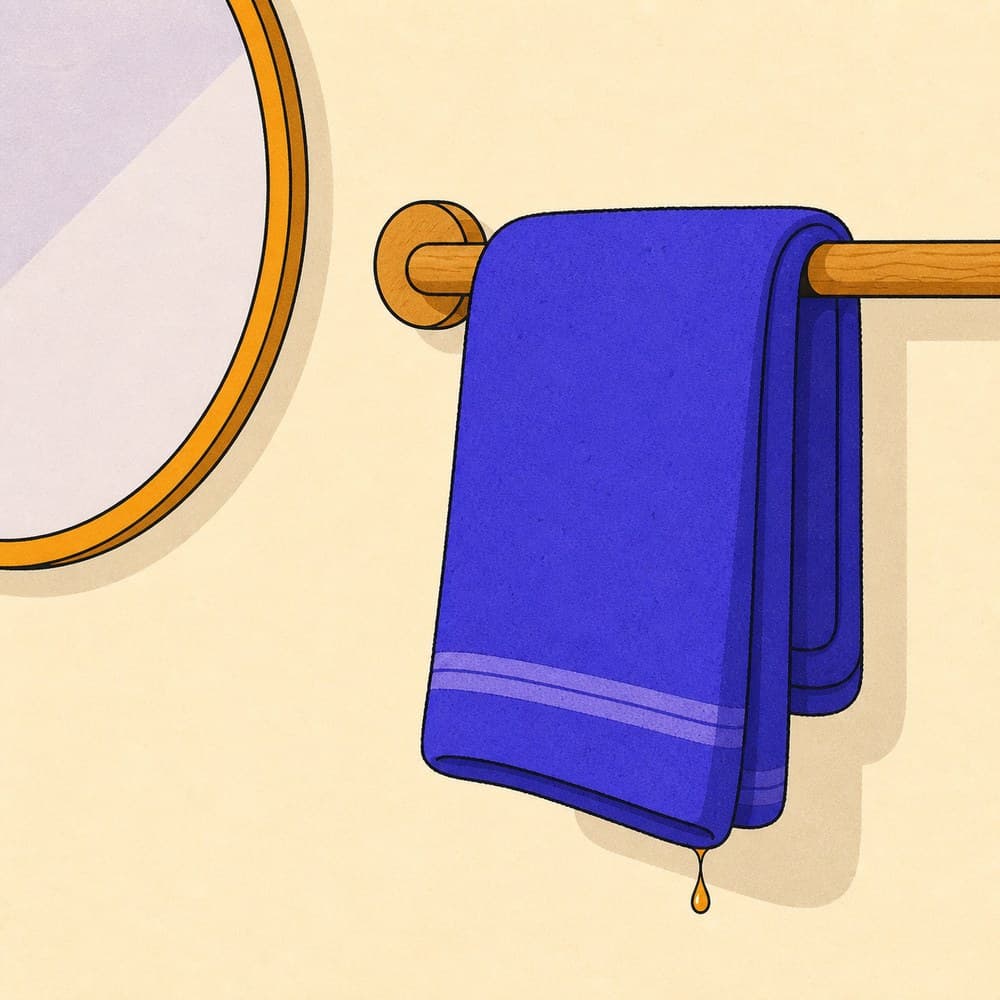
towel
/ˈtaʊ.əl/
Meaning
A thick cloth used to dry your body, your hands or wet dishes.
In a sentence
At home
“Hang the wet towel on the line, not on the bed.”
Kitchen
“Keep a small towel near the kitchen sink.”
In practice: You 'dry yourself with a towel'. The cloth for dishes is a 'tea towel' or 'kitchen towel'.
soap
/səʊp/
Meaning
A substance used with water to clean the body or other things.
In a sentence
Bathroom
“The soap is finished, please buy a new bar.”
At home
“Wash your hands with soap for twenty seconds.”
In practice: 'Soap' is usually uncountable. Say 'some soap' or 'a bar of soap', never 'a soap'.
dress
/dres/
Meaning
To put clothes on yourself or on someone else.
In a sentence
Morning
“I dress quickly and leave the house by eight.”
At home
“She dressed the baby before the guests arrived.”
In practice: For yourself, 'get dressed' sounds far more natural than 'dress': 'Get dressed, we are late'.
wardrobe
/ˈwɔː.drəʊb/
Meaning
A tall cupboard in which clothes are hung and stored.
In a sentence
At home
“All my shirts are in the wardrobe.”
At home
“The wardrobe door does not close properly.”
In practice: 'Wardrobe' also means all the clothes a person owns: 'She has a small office wardrobe'.
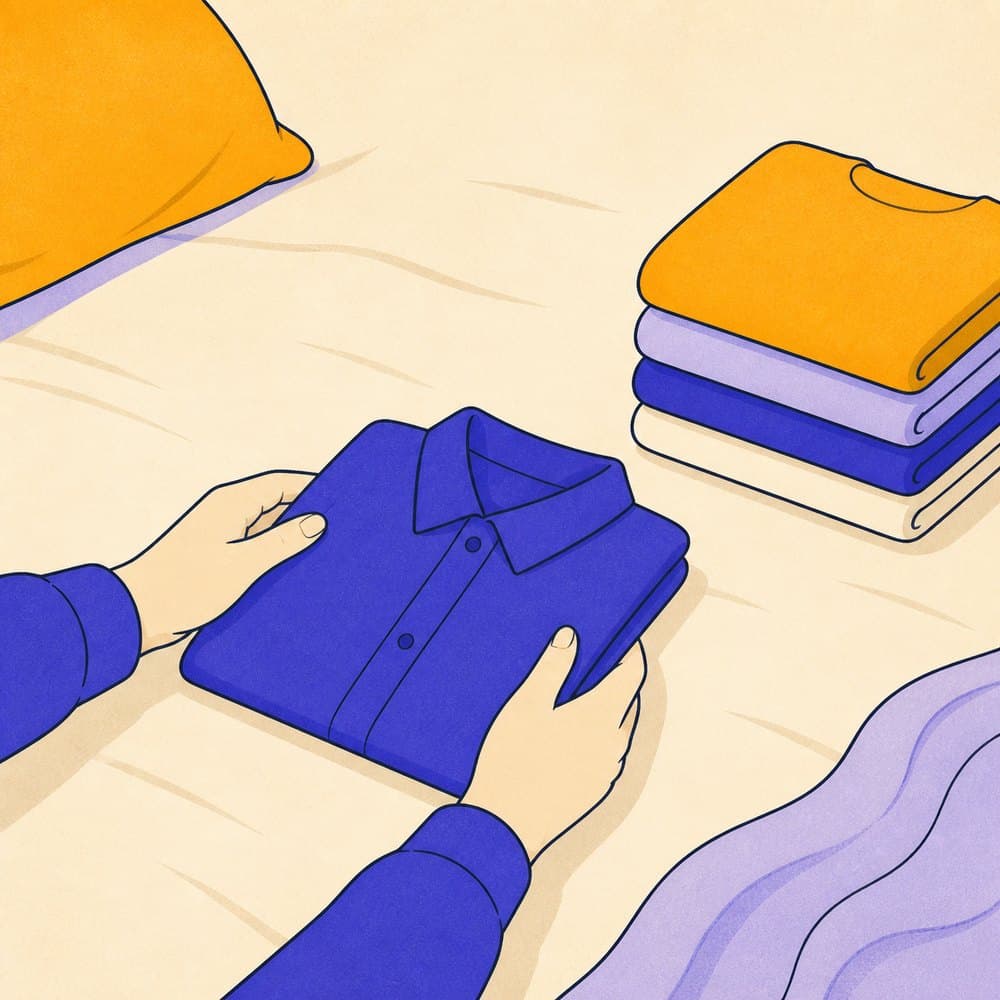
fold
/fəʊld/
Meaning
To bend cloth or paper so that one part lies flat over another.
In a sentence
At home
“I fold the dried clothes while watching the news.”
Chores
“Please fold the bedsheet and keep it in the drawer.”
In practice: Use 'fold' for cloth and paper. Furniture that closes up is 'folding': a folding chair.
iron
/ˈaɪən/
Meaning
To press clothes flat and smooth with a hot metal tool; also the tool itself.
In a sentence
Chores
“I iron my shirts on Sunday evening.”
At home
“The iron is very hot, do not touch it.”
In practice: Say it like 'eye-urn'. The activity is 'ironing': 'I have a lot of ironing today'.
laundry
/ˈlɔːn.dri/
Meaning
Clothes that need washing, or the work of washing them.
In a sentence
Chores
“I do the laundry twice a week.”
At home
“There is a pile of laundry near the washing machine.”
In practice: 'Laundry' is uncountable. Say 'a lot of laundry', never 'many laundries'.
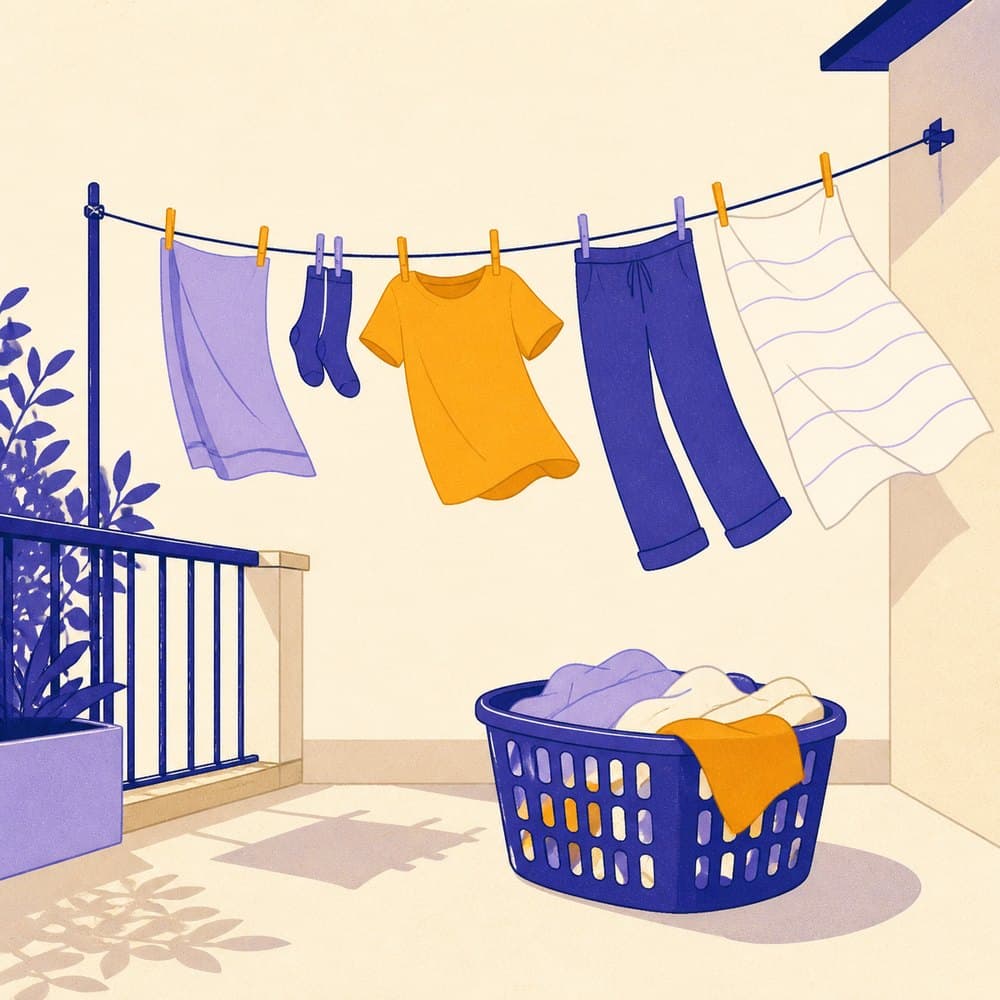
detergent
/dɪˈtɜː.dʒənt/
Meaning
A powder or liquid used for washing clothes or dishes.
In a sentence
Chores
“Add one spoon of detergent to the machine.”
At home
“This detergent removes oil marks very well.”
In practice: Detergent is for cloth and dishes. The bar you use on your body is soap, not detergent.
soak
/səʊk/
Meaning
To leave something in water for a long time.
In a sentence
Chores
“Soak the clothes for ten minutes before washing them.”
At home
“My shoes got soaked in the rain.”
In practice: 'Soaked' also means completely wet: 'I reached home soaked'.
hang
/hæŋ/
Meaning
To fix something so that it hangs down, such as clothes on a line.
In a sentence
Chores
“Hang the wet clothes on the balcony line.”
At home
“The calendar hangs behind the door.”
In practice: For objects the past form is 'hung': 'I hung the shirt'. Inside a wardrobe you use a 'hanger'.
chore
/tʃɔː/
Meaning
A small, regular job that has to be done at home.
In a sentence
At home
“Washing utensils is my least favourite chore.”
Family
“We divide the chores between the four of us.”
In practice: Chores are household jobs. Something you must finish at your desk is a 'task', not a chore.
sweep
/swiːp/
Meaning
To clean a floor by pushing dirt away with a broom.
In a sentence
Chores
“I sweep the front room every morning.”
At home
“She swept the dirt out through the back door.”
In practice: The past form is 'swept', never 'sweeped'.
broom
/bruːm/
Meaning
A brush with a long handle used for cleaning floors.
In a sentence
At home
“The broom is kept behind the kitchen door.”
Chores
“Buy a new broom, this one is worn out.”
In practice: You sweep 'with a broom'. A short one used with a dustpan is a 'hand broom'.
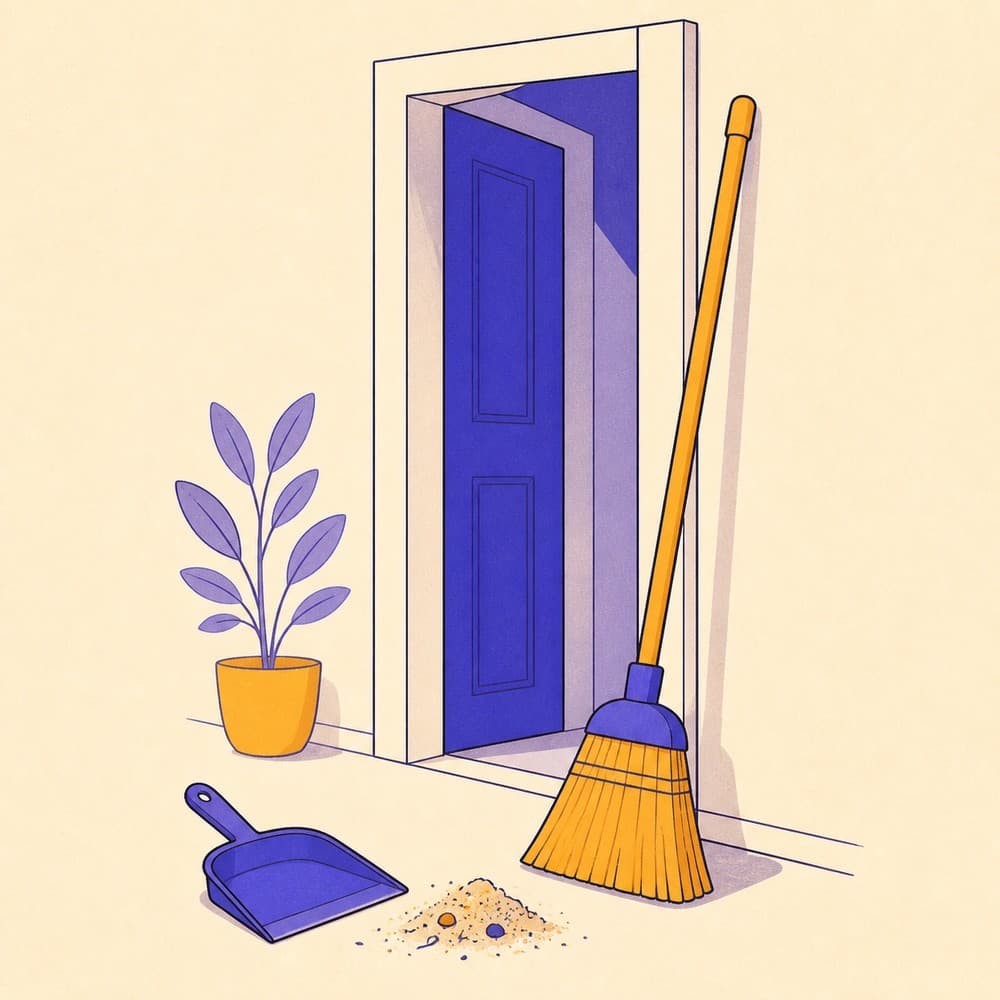
mop
/mɒp/
Meaning
To clean a floor using a wet cloth on a long stick; also the tool itself.
In a sentence
Chores
“I mop the floor after sweeping it.”
At home
“Squeeze the mop before you use it again.”
In practice: Note the double 'p': mopped, mopping. Sweeping is dry work, mopping is wet work.
bucket
/ˈbʌk.ɪt/
Meaning
A round open container with a handle, used mainly for carrying water.
In a sentence
At home
“Fill the bucket before the water supply stops.”
Bathroom
“I bathe with one bucket of water.”
In practice: Say 'a bucket of water'. You fill a bucket from a tap; you never 'open' a bucket.
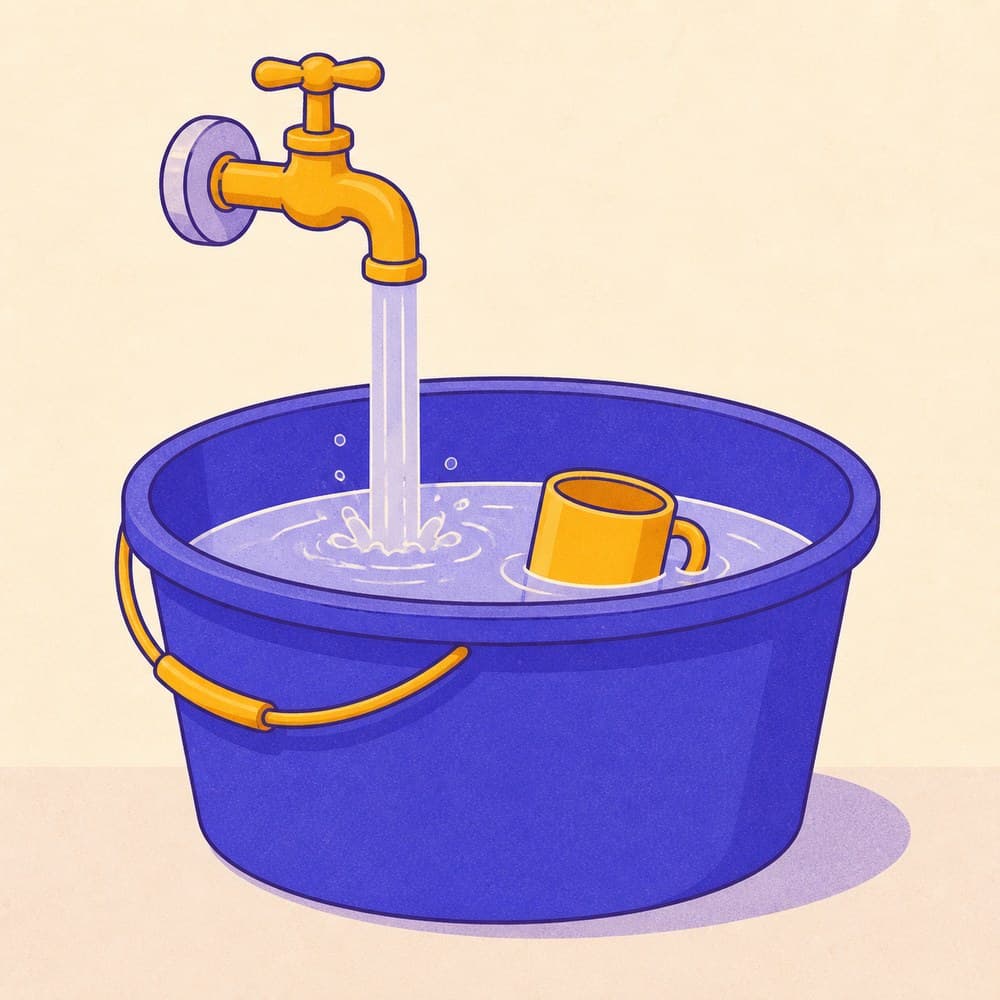
dust
/dʌst/
Meaning
The fine dry powder that settles on surfaces; also to remove it.
In a sentence
At home
“There is a lot of dust on the fan and the shelves.”
Chores
“I dust the table every morning.”
In practice: As a verb it means to take dust away, not to add it. 'Dusty' describes a surface covered in dust.
wipe
/waɪp/
Meaning
To clean or dry a surface by rubbing it gently with a cloth.
In a sentence
Kitchen
“Wipe the table after dinner.”
At home
“He wiped the mirror with a dry cloth.”
In practice: Wiping is light cleaning with a cloth. Hard cleaning with pressure is 'scrubbing'.
scrub
/skrʌb/
Meaning
To rub something hard, usually with a brush, to get it clean.
In a sentence
Kitchen
“I scrub the pans until they shine.”
Chores
“She scrubbed the bathroom floor on Sunday.”
In practice: Scrubbing needs effort and a rough surface. Note the double 'b': scrubbed, scrubbing.
rinse
/rɪns/
Meaning
To wash something with clean water to remove soap or dirt.
In a sentence
Kitchen
“Rinse the plate twice before keeping it in the rack.”
Bathroom
“I rinsed my mouth after brushing.”
In practice: Rinsing comes after washing and uses plain water only, with no soap.
dustbin
/ˈdʌst.bɪn/
Meaning
A container in which you put waste.
In a sentence
At home
“Throw the wrapper in the dustbin, not on the floor.”
Chores
“The dustbin is full, please empty it.”
In practice: 'Dustbin' is British and common in India. 'Bin' is the short form; Americans say 'trash can'.
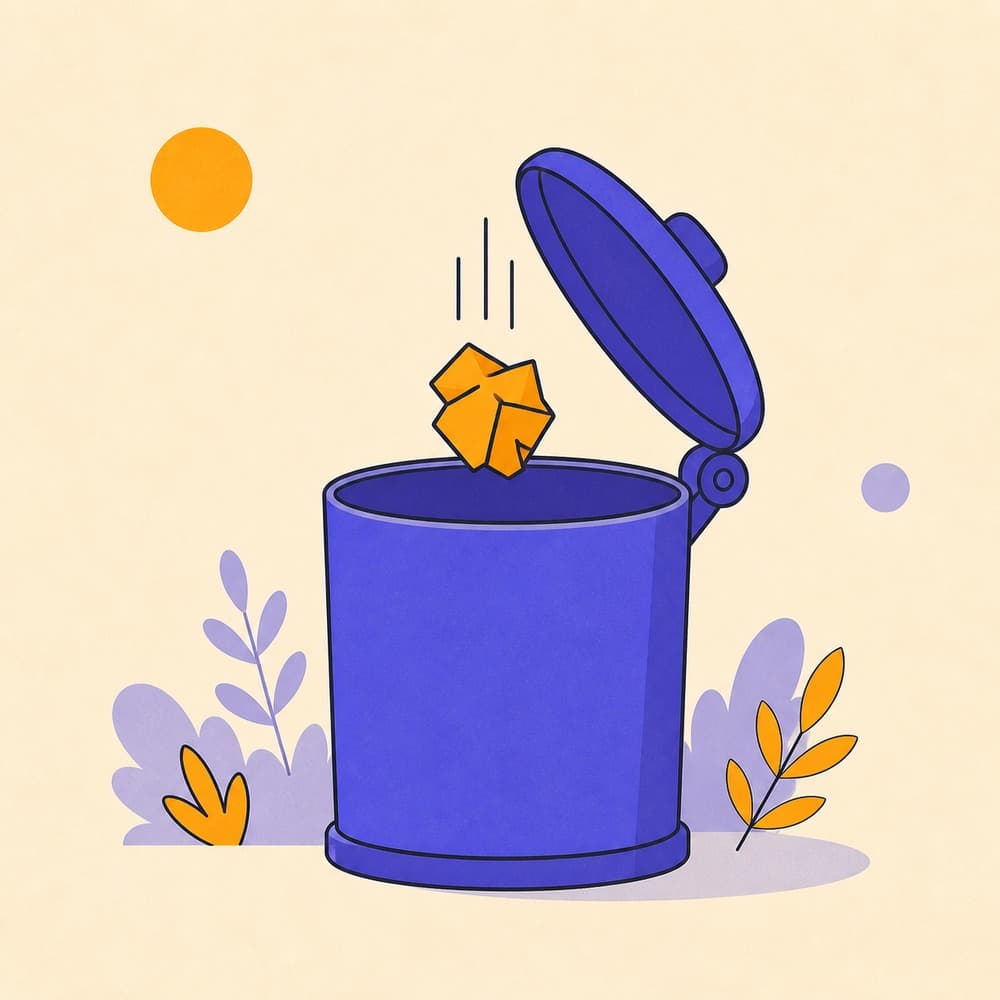
clutter
/ˈklʌt.ə/
Meaning
Too many things lying around in an untidy way.
In a sentence
At home
“There is so much clutter on my table.”
Chores
“Clear the clutter before the guests arrive.”
In practice: 'Clutter' is uncountable. Say 'so much clutter', never 'so many clutters'.
tidy
/ˈtaɪ.di/
Meaning
Neat, with every thing in its correct place; also to make a place neat.
In a sentence
At home
“Her room is always tidy.”
Chores
“Let us tidy the hall before Amma returns.”
In practice: The everyday phrasal verb is 'tidy up': 'Tidy up your desk'. The opposite adjective is 'untidy'.
messy
/ˈmes.i/
Meaning
Untidy or dirty, with things lying in the wrong places.
In a sentence
At home
“The kitchen is messy after cooking.”
Family
“Sorry, the house is a little messy today.”
In practice: The noun is 'mess': 'What a mess!' Do not turn it into 'messyness' in speech.
spill
/spɪl/
Meaning
To let liquid fall out of its container by mistake.
In a sentence
At home
“I spilled tea on the newspaper.”
Kitchen
“Wipe the spill quickly before someone slips.”
In practice: Both 'spilled' and 'spilt' are correct in British English. As a noun, 'a spill' is the mess itself.
stain
/steɪn/
Meaning
A mark on cloth or a surface that is hard to remove.
In a sentence
At home
“This turmeric stain will not come off.”
Daily life
“He stained his sleeve with ink.”
In practice: A stain stays after the cloth dries. A wet mark that wipes off easily is just a spot.
kitchen
/ˈkɪtʃ.ɪn/
Meaning
The room in a home where food is prepared.
In a sentence
At home
“Our kitchen is small but well organised.”
At home
“She was in the kitchen when the doorbell rang.”
In practice: Useful pairs: 'kitchen sink', 'kitchen shelf', 'kitchen towel'.
stove
/stəʊv/
Meaning
The equipment on which pans are heated to prepare food.
In a sentence
Kitchen
“Please switch off the stove before you leave.”
At home
“Our stove has two burners.”
In practice: 'Gas stove' is the common form in India. British English also says 'hob' or 'cooker'.
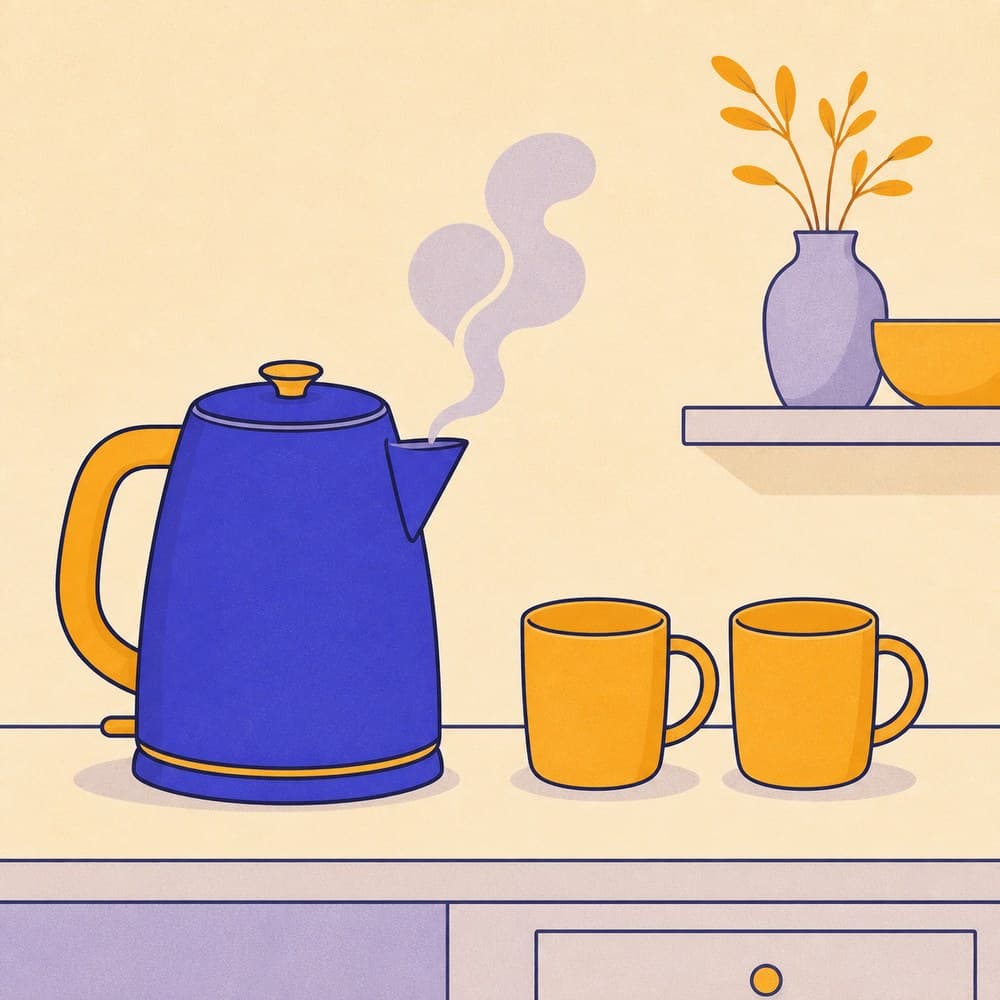
kettle
/ˈket.əl/
Meaning
A covered container used to boil water.
In a sentence
Kitchen
“Put the kettle on, guests are coming.”
At home
“Our electric kettle boils water in two minutes.”
In practice: 'Put the kettle on' is a fixed phrase that means start making tea.
fridge
/frɪdʒ/
Meaning
A cold cupboard that keeps food and milk fresh.
In a sentence
Kitchen
“Put the milk back in the fridge.”
At home
“Our fridge is full before every festival.”
In practice: 'Fridge' is the everyday word and 'refrigerator' the formal one. Say 'in the fridge', never 'inside of the fridge'.
sink
/sɪŋk/
Meaning
A fixed basin with a tap where you wash things.
In a sentence
Kitchen
“The dirty plates are in the sink.”
At home
“The sink is blocked again.”
In practice: The kitchen has a 'sink'. The one in the bathroom is usually called a 'washbasin' or just a 'basin'.
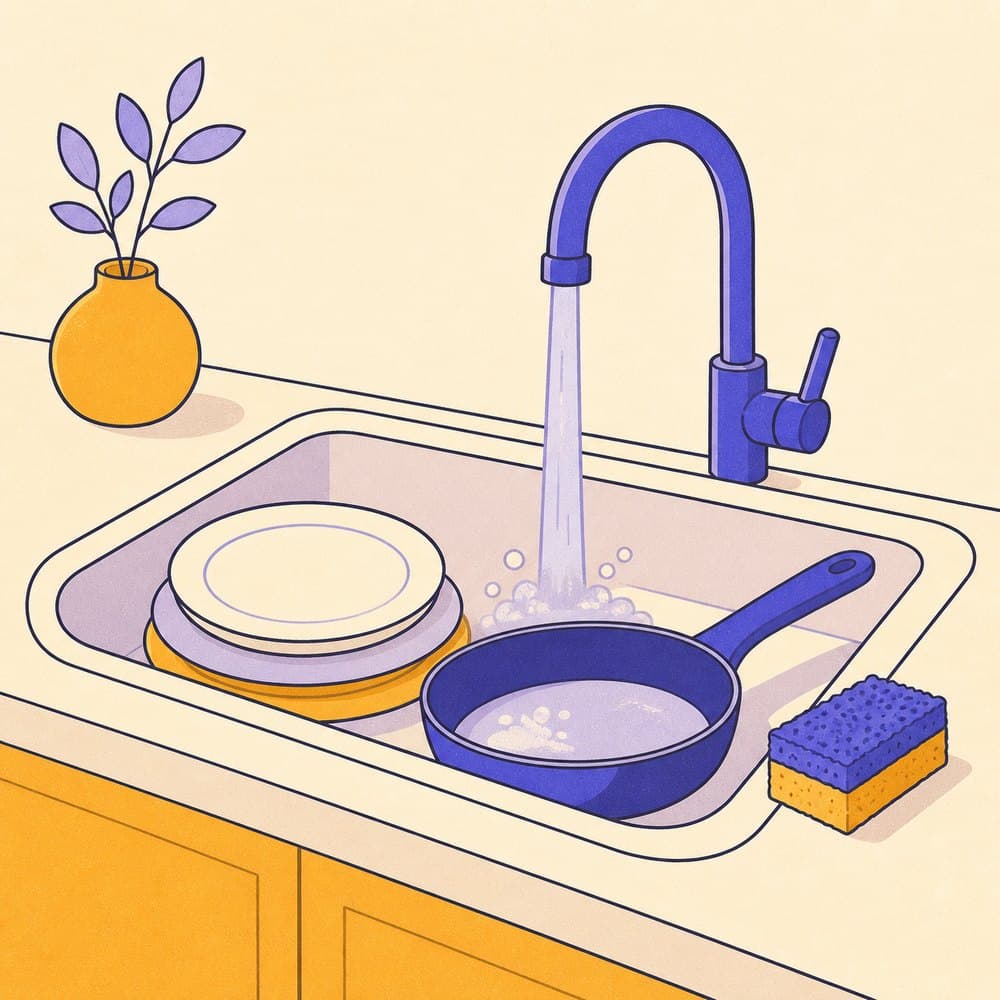
tap
/tæp/
Meaning
The part you turn to let water come out.
In a sentence
Bathroom
“Turn off the tap while you are brushing.”
At home
“The tap in the kitchen is leaking.”
In practice: British English says 'tap', American English says 'faucet'. Use 'turn on' and 'turn off', not 'open' and 'close'.
cupboard
/ˈkʌb.əd/
Meaning
A piece of furniture with doors and shelves for storing things.
In a sentence
Kitchen
“The rice is in the top cupboard.”
At home
“Lock the cupboard before you leave.”
In practice: The 'p' is silent. Say it as 'KUB-erd', in two beats only.
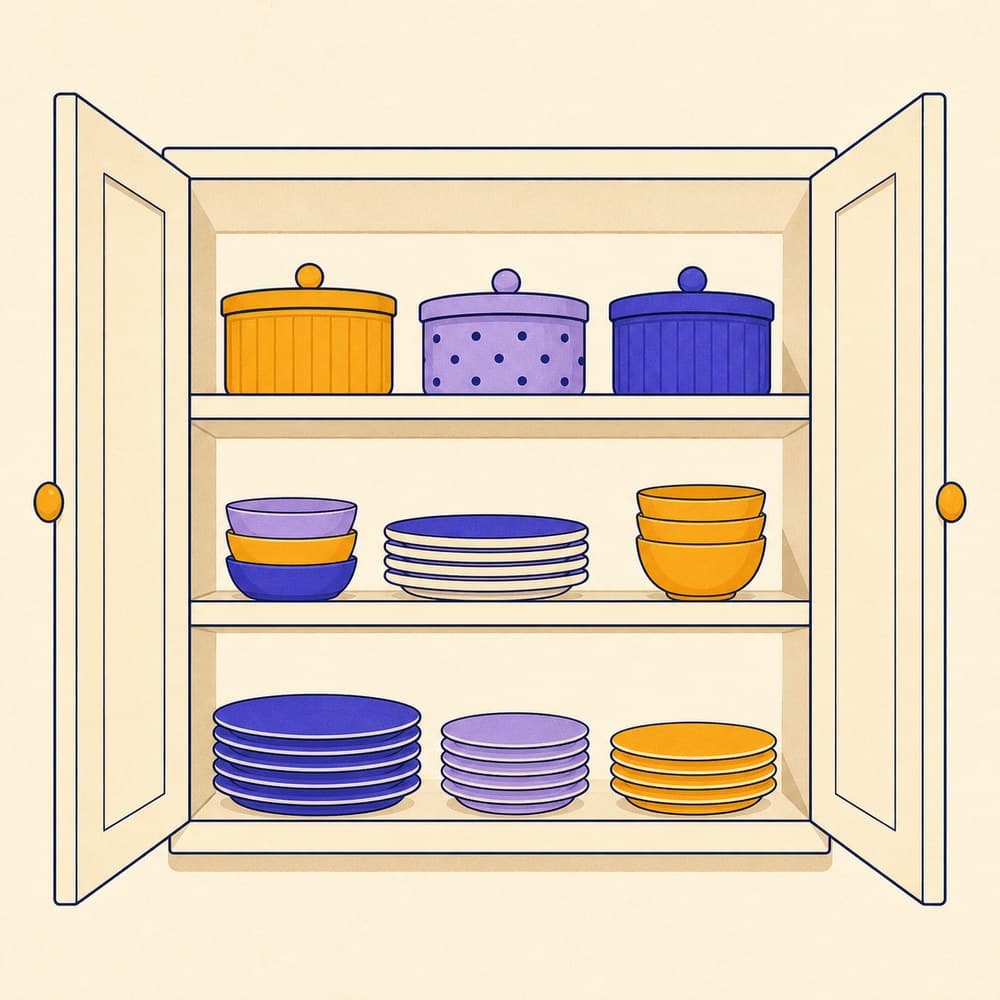
shelf
/ʃelf/
Meaning
A flat board fixed on a wall or inside furniture for keeping things on.
In a sentence
Kitchen
“Keep the spice boxes on the second shelf.”
At home
“The books are on the shelf near the window.”
In practice: The plural is 'shelves', not 'shelfs'.
drawer
/drɔː/
Meaning
A box-shaped part of a table or cupboard that slides in and out.
In a sentence
At home
“My documents are in the bottom drawer.”
Kitchen
“Keep the spoons in the kitchen drawer.”
In practice: It sounds almost the same as the word 'draw'. Learners often misspell it as 'drawar'.
curtain
/ˈkɜː.tən/
Meaning
A piece of cloth hung over a window or a doorway.
In a sentence
At home
“Draw the curtains, the sun is very strong.”
Chores
“She washed the curtains before the festival.”
In practice: 'Draw the curtains' can mean open or close them, so say 'pull the curtains back' when you want to be clear.

mattress
/ˈmæt.rəs/
Meaning
The soft thick part of a bed that you lie on.
In a sentence
At home
“We keep a spare mattress for guests.”
At home
“This mattress is too soft for my back.”
In practice: Note the double 't' and double 's', and stress the first part: MATT-ress.
blanket
/ˈblæŋ.kɪt/
Meaning
A thick cover used on a bed to keep you warm.
In a sentence
At home
“Take another blanket, it is cold tonight.”
Morning
“She folded the blanket and kept it on the shelf.”
In practice: A blanket keeps you warm; the thin cloth spread under you is a 'bedsheet'.
switch
/swɪtʃ/
Meaning
The small button on a wall that turns power on or off; also to turn something on or off.
In a sentence
At home
“Press the switch near the door for the fan.”
Daily life
“Switch off the lights when you leave the room.”
In practice: Use 'switch on' and 'switch off' for lights and fans. 'Open the light' is not correct English.
household
/ˈhaʊs.həʊld/
Meaning
All the people who live together in one home; also anything relating to the home.
In a sentence
Family
“Four of us share the household work here.”
At home
“Soap and detergent are household items.”
In practice: It works as a noun and as an adjective: 'a household of six', 'household chores'.
relative
/ˈrel.ə.tɪv/
Meaning
A person in your family, such as an uncle, an aunt or a cousin.
In a sentence
Family
“Some relatives are coming for the weekend.”
Family
“He is a distant relative on my mother's side.”
In practice: 'Relative' and 'relation' both work. The verb form is 'related to': 'I am related to him'.
sibling
/ˈsɪb.lɪŋ/
Meaning
Your brother or your sister.
In a sentence
Family
“I have two siblings, one brother and one sister.”
At home
“Siblings often share a room in a small flat.”
In practice: 'Sibling' is neutral and useful on forms. In daily conversation people still say 'brother' or 'sister'.
Chapter 1 check
Choose the best word for each question, then read the explanation to check your understanding.
Which verb means to clean a floor using a broom?
sweepmoprinsefoldReveal answer to 1
sweep — A broom is dry cleaning equipment, and the verb that goes with it is 'sweep'.
Aarti put too much _____ in the washing machine and foam came out of it.
detergentkettlecurtainmattressReveal answer to 2
detergent — The powder or liquid used for washing clothes is detergent, and too much of it creates foam.
Which word means a small, regular job at home, such as washing utensils?
choreroutineshelfswitchReveal answer to 3
chore — Household jobs like washing utensils or sweeping are called chores.
Which single word means your brother or your sister?
siblingrelativehouseholdroutineReveal answer to 4
sibling — A brother or sister is a sibling; 'relative' is wider and includes uncles, aunts and cousins.
Ravi did not hear his phone in the morning and reached the office late because he _____.
oversleptsweptrinsedfoldedReveal answer to 5
overslept — Sleeping longer than you planned is 'oversleeping', and the past form is 'overslept'.
Which word describes a room where clothes, books and cups are lying everywhere?
messytidyneatspotlessReveal answer to 6
messy — When things are in the wrong places, the room is messy; the other three all mean the opposite.
Amma keeps the plates and glasses in the _____ above the kitchen sink.
cupboarddustbintowelbroomReveal answer to 7
cupboard — Furniture with doors and shelves for storing things is a cupboard.
Which verb means to leave clothes in water for a long time before washing them?
soakhangfoldwipeReveal answer to 8
soak — Leaving something in water so it becomes fully wet is soaking.
Which object do you use to boil water quickly for tea?
kettlebucketdrawermopReveal answer to 9
kettle — A kettle is made for boiling water, which is why 'put the kettle on' means start making tea.
Chai fell on a white shirt and left a dark mark that will not wash off. What is that mark called?
stainspillclutterdustReveal answer to 10
stain — The lasting mark left behind is a stain; the moment the liquid falls is the spill.
Carry these into tomorrow morning
- The cleaning verbs are not interchangeable: you sweep with a broom, mop with water, wipe with a cloth and scrub with a brush.
- Say 'switch on' and 'switch off' for lights and fans, and 'turn on' and 'turn off' for taps; 'open the light' is never correct.
- Laundry, clutter, dust and soap are uncountable, so they take no 'a' and no plural 's'.
- Three words in this chapter hide a silent letter: comb, cupboard and iron are not said the way they are spelt.
- Fixed phrases sound far more natural than bare verbs, so practise 'get dressed', 'have a shower' and 'do the laundry'.
- 'Sibling' and 'relative' are neutral words that suit forms and introductions, while everyday talk still prefers brother, sister, uncle or aunt.
- Build any home sentence by naming the object first, then adding the verb: bucket and fill, shelf and keep, curtain and draw.
50 of 500 · 10%
You can now say 50 of the 500 words in this book. Keep going.