Competitive Exams
Prepare for the English section of SSC CGL, IBPS PO, SBI PO, RBI Grade B, and UPSC exams. Vocabulary, grammar, comprehension strategies, and interview tips.
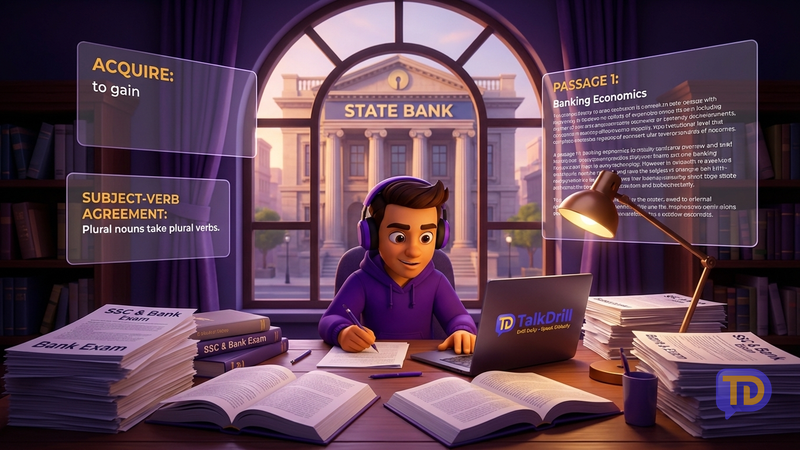
English plays a significant role across India's major competitive examinations, appearing as a dedicated section in exams like SSC CGL, SSC CHSL, IBPS PO/Clerk, SBI PO, RBI Grade B, and UPSC CSAT. In banking exams, the English section typically carries 30-40 marks and includes reading comprehension, cloze tests, error spotting, sentence improvement, and para jumbles. SSC exams test vocabulary (synonyms, antonyms, idioms), grammar (active-passive, direct-indirect speech), and one-word substitutions. UPSC evaluates comprehension and precis writing in the CSAT paper and essay stages.
The key focus areas for competitive exam English are vocabulary building (particularly word roots, contextual usage, and frequently tested word lists), grammar fundamentals (tense consistency, subject-verb agreement, preposition usage, and articles), and reading speed with accurate comprehension. Many candidates from Hindi-medium or regional-medium backgrounds find this section challenging because textbook grammar differs from how English is actually tested in these exams.
Beyond the written paper, several competitive exams include an interview or personality test where English communication ability is assessed directly. UPSC CSE, RBI Grade B, NABARD, and banking PO exams all have interview rounds where candidates must articulate their views clearly, respond to follow-up questions under pressure, and demonstrate the communication skills expected of a government officer or banking professional.
Practising spoken English strengthens written English as well — it reinforces sentence structure instincts, improves vocabulary recall under time pressure, and builds the confidence needed to attempt the English section without anxiety. Regular speaking practice complements traditional study methods and helps bridge the gap between knowing grammar rules and applying them accurately.